

Welcome back to the Wild Globalization Project!
We’re still talking about “capital” and “capitalism.”
Let’s talk about…
Private Property, Demand & Desire, and Wild Asymmetries
The human value game gets wildly real as we carry it around in our pockets, in our “titles and accounts,” or in our “bitcoined” smartphones. We call it “private property.” It’s “ours(!)”


The modern human value-creativity-destructivity ethos encourages us, through work, or smarts and ingenuity, maybe some luck, to acquire “stuff” – a car, a house, a business, a piece of land, a fortune. We “title” the high-value stuff in formal, legal systems.
The private property in your pocket or in your home or in your investment portfolio is the singular, “hard-wired,” example of the white and black magic power and incessant momentum of hyper-human value. In consuming and owning private property, we all live and own and propagate capital and capitalism, that is, our human creative-destructive powers.
So, in our modern lives we take “property” for granted, along with the “right” to “own” it. “How is that – how did private property come about?”
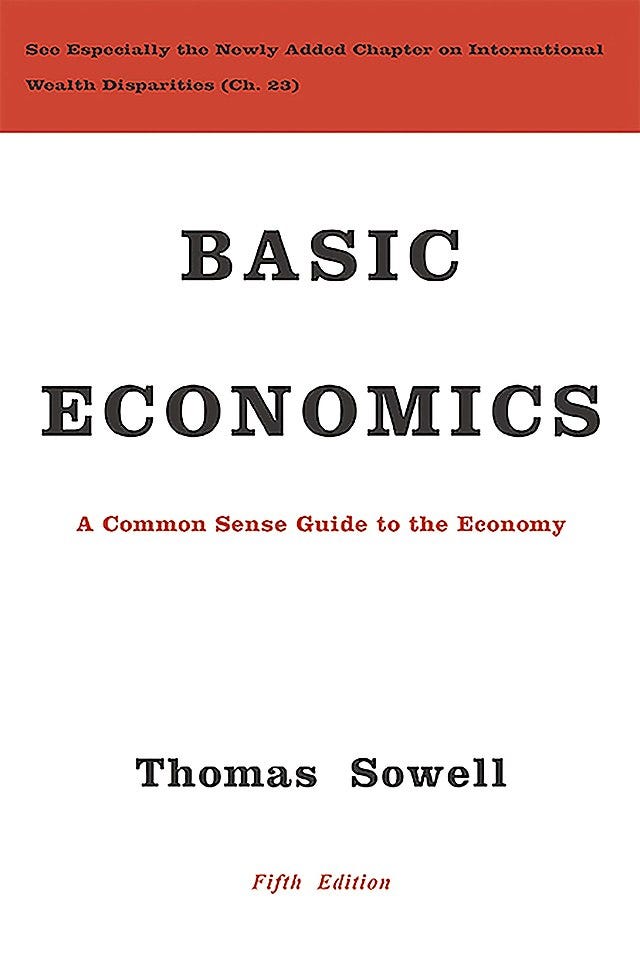
Again, as Thomas Sowell reminds us, human value-creation, exchange, and distribution (“economy”) starts with how we manage given resources. As we imagine the Anthropocene’s footprints, we need to reconsider how peoples have experienced their value relationships with the Earth’s resources.
Before the ag-revolution’s 8-12,000-year run to the present, hunter-gather cultures likely competed and maintained boundaries for the best hunting grounds. But they didn’t work the day thinking they “owned” or held legal “title” to those grounds. Rather, as their traditions and cultures reveal, they lived the Earth’s spaces as “sacred,” as “given” by “divine spirits.”
However, under the gradual emergence of agriculture, growing and controlling food resources meant managing and governing land spaces and food resources, especially grain but also husbanded cattle and sheep. “Land” and “space” and the Earth’s creatures were gradually transformed from fully “open,” “free,” even divinely given, to increasingly “acquired,” “owned,” and “controlled” spaces.
When you chase and kill the wild goat, or sheep, or hunt the great bison on the open plain, they’re indeed wild and free. And your life is at risk. But when you instead catch and pen up the creature, and you make it a permanent object in your coral or pantry, it’s no longer free. It’s now under your control, indeed, your “ownership.” It becomes a “reserve” to be “owned,” “managed,” “measured,” and even “traded.” Over hundreds of generations, the creature’s wildness is subtly demystified, it becomes an “object of value.” Husbanding practices transvalued the objects and creatures it controlled. Likewise, the Earth’s rich landed spaces gradually became “production spaces” to be managed, divided, apportioned, their wild and free openness also “demystified.”
Agriculture gradually, over thousands of years, transvalued the human production game’s relationship to the Earth. A new wild emerged. This transformation created vast new economic value. But it changed human nature and the nature of Nature itself. It diminished the free and mysterious “givenness” of creatures and spaces. By Marx’s 19th century Das Kapital, land, cattle, or the apple would be transformed to “commodities,” their original value transvalued to “human use value,” that is, simply a raw, objectified, physical “resource” that human labor taps for its use.
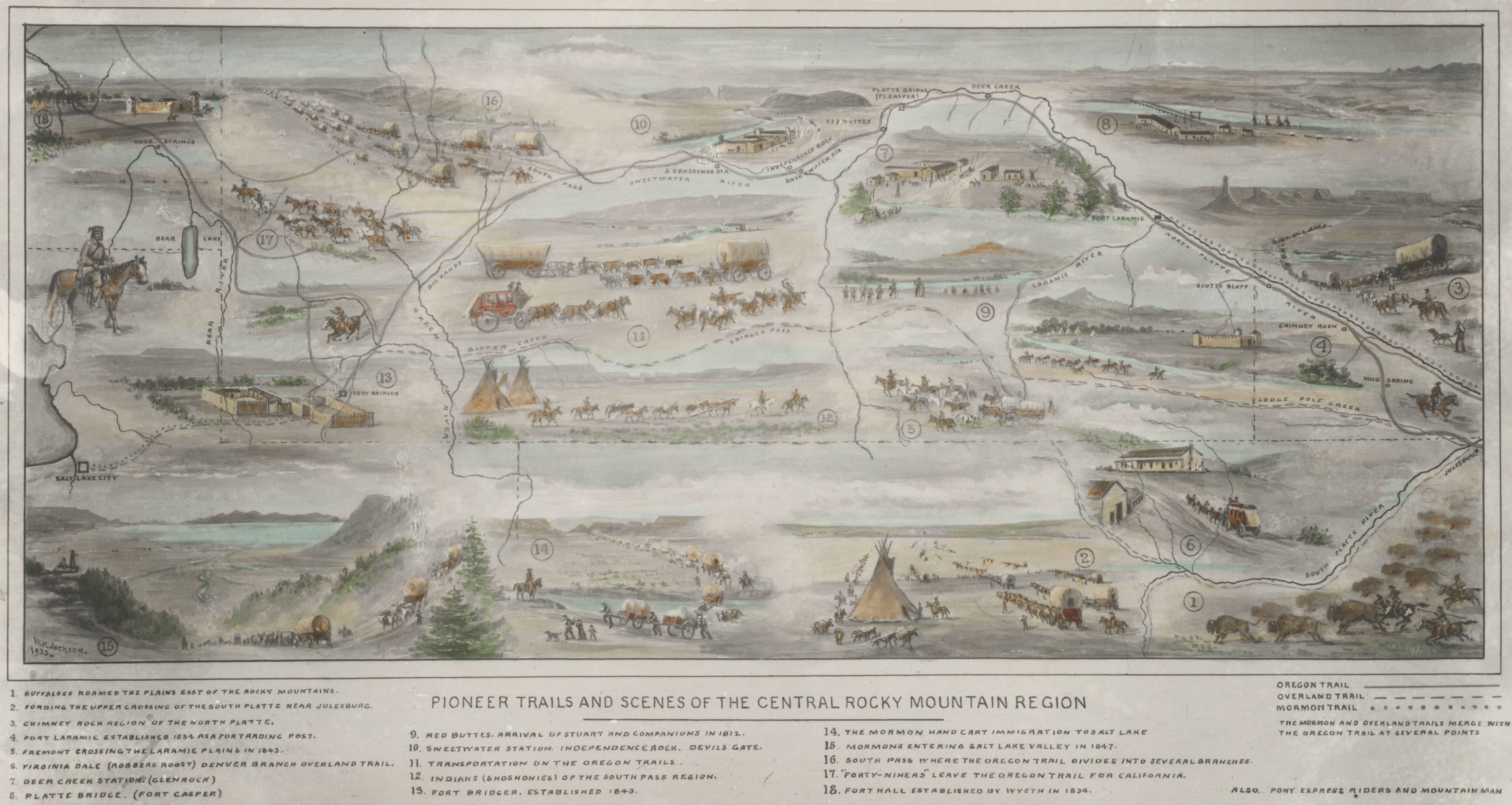
For example, the nomadic peoples of North America’s Great Plains like the Lakota lived their lives in synchrony and synergy with the land’s vast and fecund ecologies. They lived in harmony with the Great American Bison (“tȟatȟáŋka” in Lakota) meaning “self-sacrifice…giving until there is nothing left.” The Bison “gave” the Plains peoples sustenance – food, clothing, and shelter – but also “spiritual” life. In their creation myths, the Bison were partnering souls given by the “Great Spirit.”16 “Kills of the hunt” were sacred events and ritually celebrated rather than objects on a “balance-sheet.” That divine connection would collide violently and tragically with the onrush of modernity’s new agriculture and industrial ethos value systems. Though their cultures were highly advanced and adaptive to the Plain’s ecologies,17 they were unable to compete with the more dynamic and scaled cultural-technological creativity-destructivity ethos of the peoples from the East.
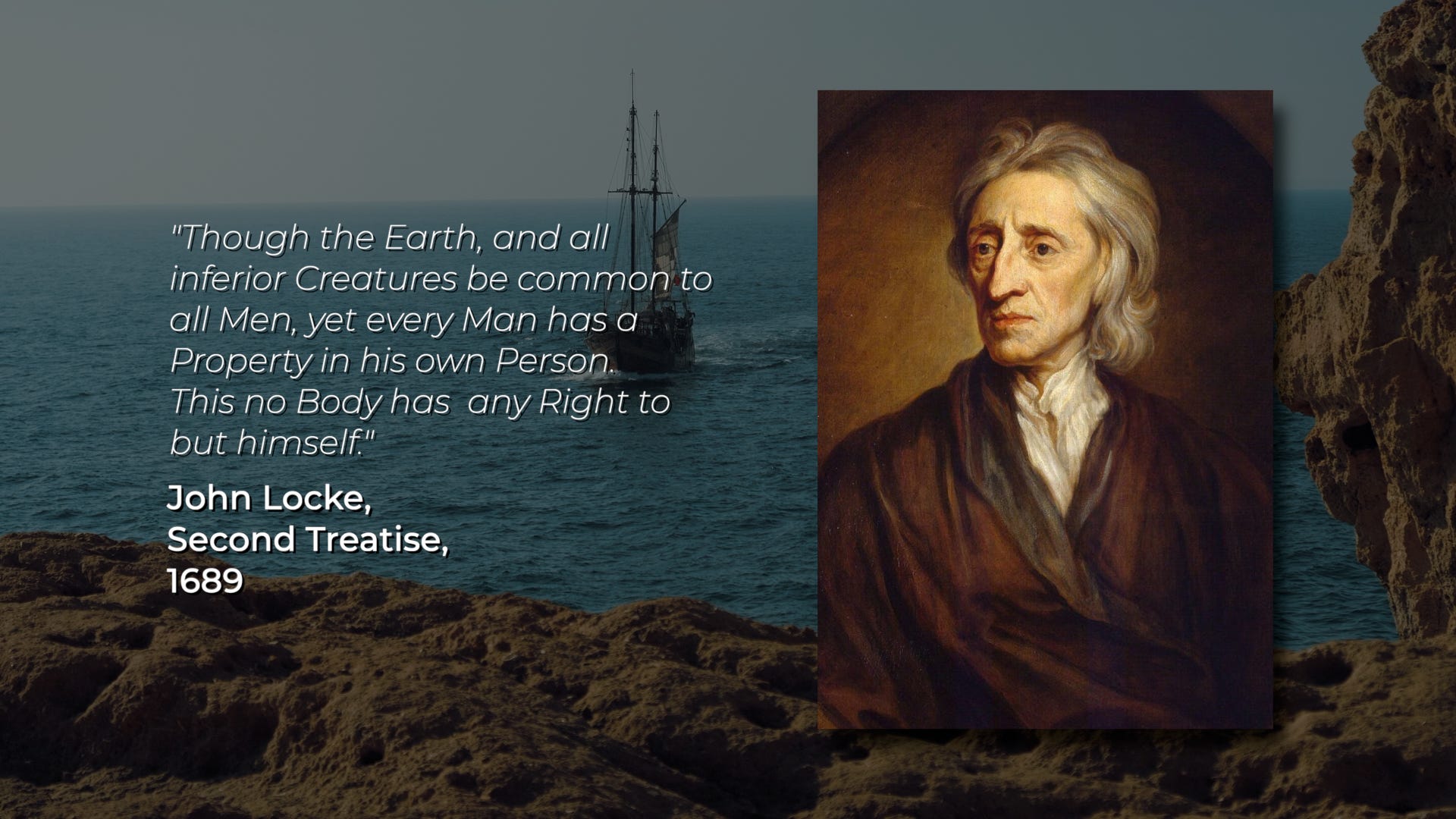
By 1690 C.E., Europe’s John Locke had declared private property a “natural human right”18 which tended to overwrite Plato’s Republic’s “communal” property rights two thousand years earlier. Just one hundred years later, the Americans’ 1803 Louisiana Purchase consummated their “claim” to the Great Plains and would simply overwhelm the indigenous peoples’ primal, free-roaming, communal ethos.
Eurasian peoples had already moved through the advanced stages of agriculture’s 10,000 year run, and subsequently through the Scientific and Industrial Revolutions. When these new Eurasian-European-Americans appeared on the Plains, their “modern” civilization had already been radically transformed and, indeed, “transvalued,” from its pre-agricultural roots. This modern Eurasian ethos valued technical innovation, consumer markets, private property, financial management, complex social governance, and advanced militaries. This force of this emerging ethos culminated in the Americans’ “doctrine of manifest destiny.”
On the American “frontier,” private property, sanctified into frontier law with the 1862 Homestead Act, gave permanent property rights to any settler willing to work the land for five years. The new wild had shown up on the Great Plains. By the end of the 19th century, the great bison had disappeared, and the American frontier would be laced with railroads delivering ranchers and farmers every manner of Sears Roebuck manufactured private property consumer products.
Private property empowers and scales radical innovation, which then simply and logically gives rise to social-economic dominance. Private property resource management simply “works” the quantum entanglement of wild forces more dynamically and powerfully, if less compassionately and ethically. When many information-imagination-knowledge players use their brains and place their own private property “assets” at risk in a “winner wins” field, radical and powerful innovation emerges. The massive U.S. automobile market would emerge from this same late 19th century ethos in the play of over 1,900 privately owned companies.
The human value creative-destructive response, transmitted in private property exchange systems, works because it also captures consumers’ more or less unrestrained human desire and demand in “free” markets. Free-thinking, paradigm-breaking, and value-seeking entrepreneurs – the Fords, Jobs, Musks, Bezos, Pony Ma’s, Daniel Eks, or Marie Curie – get ideas and gadgets and strategies to markets of private property consumers with money (“value”) in their pockets to spend. Those consumers want “stuff,” more stuff, so they buy and consume, and thus create even more, “scaled,” globalizing “value.”

As we noticed above, this hyper-powerful production-consumption phenomenon usually, emerges disruptively and asymmetrically – one nation or company or innovator can “get ahead…way ahead.” The new “prosperity” creates wealth but it overruns the current game. Suddenly we’re standing with the Lakota disappearing in the wagons dust-clouds rising on the Eastern horizon, we’re holding the Congo miners hand-dug cobalt in our smartphoned hands, or we’re haunted by the ghosts of the great bison.
This wildly globalized asymmetry is one of the most salient and dominant, and often tragic, signatures of our Anthropocene’s long run and time. Human emergence often happens, it turns out, on the heels of radical divergences – for example, this 10,000 year-long split between the pre-agricultural Americans and Eurasians, or the recent 1800-1990’s “great divergence” between Asian agricultural economies and the hyper-powerful European tech-industry we explored earlier.
Curiously, nature has its own value divergence plays.
“Ecology Capital” Responses
Wildly(!), the ecological stage for the Americas-Eurasia divergence had been set millions of years prior, deep in geologic time. Recently developed plate tectonics discoveries (1960s-present) inform us of the tremendous impact which the separation of the supercontinent Pangaea into Eurasia and the Americas (circa 200-65 million years B.C.E) would eventually have on the asymmetrical emergence of human cultures. The divergence gave Eurasia significant natural comparative advantages over the Americas during the breakout of agriculture and eventually industry in our recent Holocene period (11,700 B.C.E to present). Eurasia’s broad and connected geological spaces, its fertile river valleys (Tigris-Euphrates, Nile, Indus, Huang He), its lack of severe mountain ranges, and its East-West versus North-South climatological orientation, all favored the more prolific creation and communication of ideas and innovations, which in turn led to the scaled growth of Eurasian populations.
This great Eurasian-American natural divergence was also set in play when the earliest Americans boldly ventured into the new continent before the dawn of agriculture (13,000 B.C.E. with the Bering Land Bridge theory; or 30,000 B.C.E. with the Pacific coastal migration theory). These earliest American explorers and settlors had simply cut themselves off from the more dynamic advance and diffusion of Eurasia’s agricultural and technological revolutions.
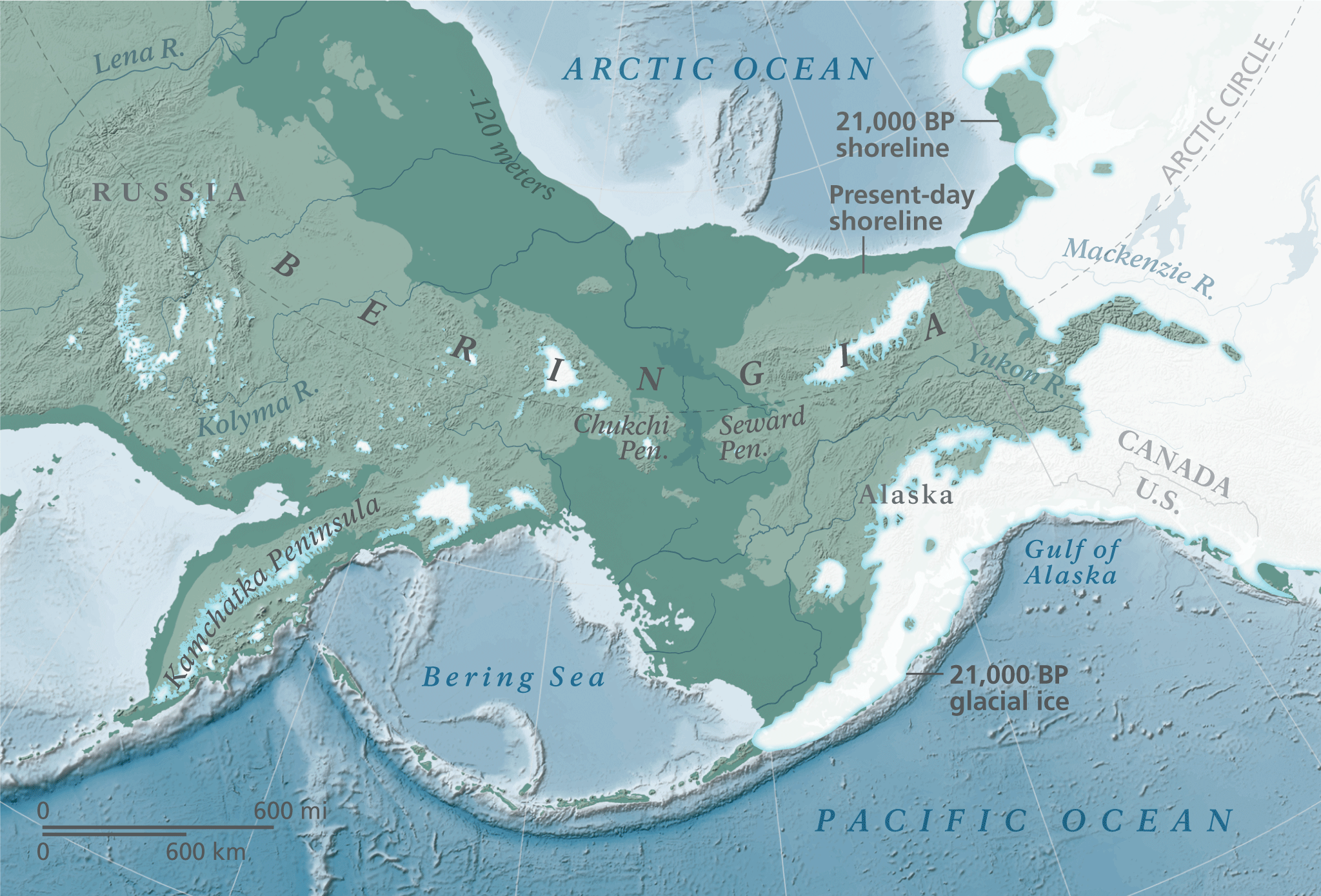
By the time their Eurasian cousins arrived in the Americas, even though the Americans had achieved significant advancements and begun their own agricultures, natural geological and demographic divergences thousands or even millions of years prior had played critical roles in the uneven advance of the human value creative-destructive response.
SCALE
Roughly ten million of us are thought to have entered the Anthropocene’s agricultural period 10,000 years ago. In “just” 400 generations – a relatively short evolutionary period - human populations have grown exponentially(!) – they’ve “scaled” – to our 21st century’s eight billion. Our pre-ag and wildly globalized brains and souls are still trying to catch up.
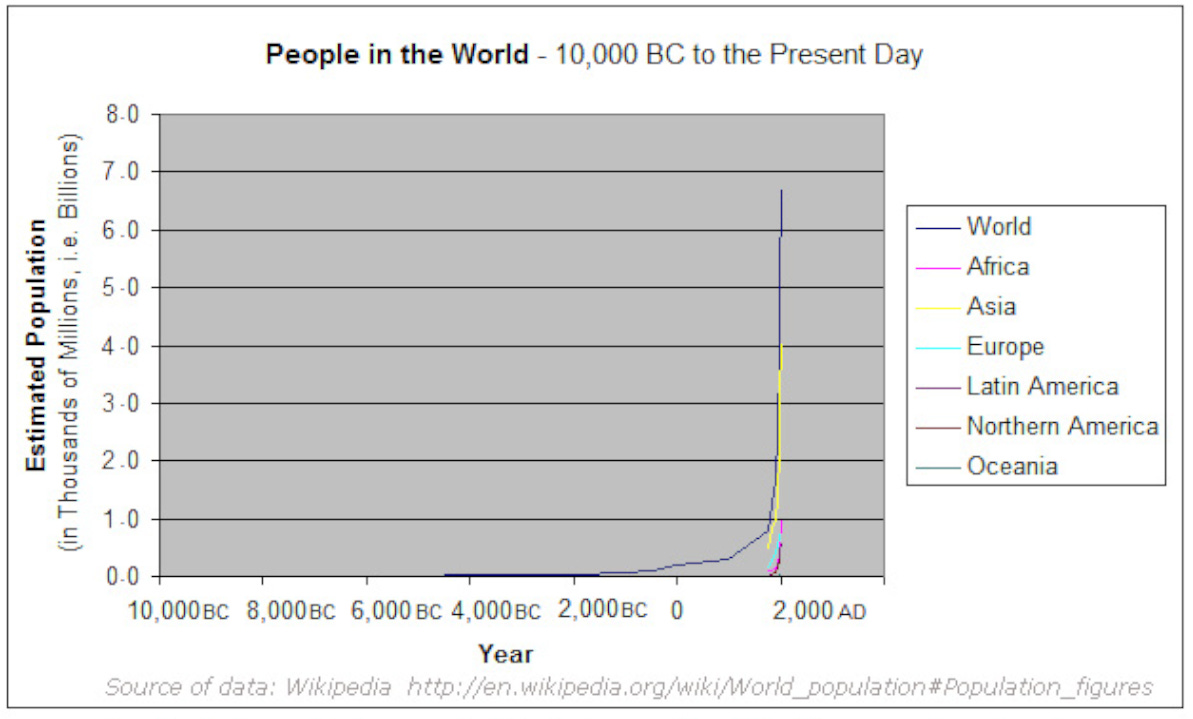
Recall how Robert William Fogel’s “techno-physio-cultural evolution” reveals this exponential scale by tracking population growth against technological development:
Scale is both a driver and a result of the human value creative-destructive response – when more of us get together, cooperate, learn from, innovate, make lots of stuff, trade it on ever larger global markets, then – hyper-naturally! – more of us prosper, we all have kids, and POOF(!), there’s eight billion of us demanding this “stuff of life.” And more stuff! And our kids – more stuff!

Consequently, scale also changes the quality of life. For example, as we innovate medical research, new discoveries and technologies emerge, people live longer, and – POOF(!) – under modern industrial-technological medicine global human life expectancy has scaled from 32 years in 1900 to 73 years in 2023.
Likewise, while early British industry was powered by thousands of “scaled,” splashing water wheels, when Newcomen and Watts ignited their coal-fired steam engines – POOF AGAIN! – overnight, we’ve got Marx’s “monopoly capital,” 12-hour workdays, and thousands of kids diving into coal mines! We’ve got modern, industrialized “SCALE!”
Scale is evidence of how the human value creative-destructive response has changed the very nature of human nature, and also the nature of Nature. Yes, the “green revolution” saved India in the 1970’s, but now it may be facilitating the radical transformation of our human global community – a million souls a week migrating to Asian and African cities – and at the same time threatening the fauna and invertebrate micro-organisms that engender the survival of all life on Earth. As E.O. Wilson warns us, “The truth is that we need invertebrates, but they don’t need us. If human beings were to disappear tomorrow, the world would go on with little change. Gaia, the totality of life on Earth, would set about healing itself and return to the rich environmental states of 100,000 years ago. But if invertebrates were to disappear, it is unlikely that the human species could last more than a few months.”
Aha! So, notice how, once we survive catastrophes, like global famine in the 1950-1970s, or the WWII, the new “survival” paradigms trigger scaling change. Scaled, industrial agriculture scales food production but gravely imperils the planet. Manhattan ends the war, but nuclear weapons proliferate, scale. By the 1989 Cold War’s wind-down, in just 4 decades, the global nuclear weapon count would peak at over 60,000, and our 21st century still holds 12,000. We call it “MAD,” for “mutually assured destruction,” when of course it’s really scaled and wild madness.


Physicist Geoffrey West brilliantly describes scale as emanating from what we’re calling this universal human circumstance which humans have taken to hyper-natural dimensions:
“[The study of scale] is a way of thinking, about asking big questions, and suggesting big answers…It’s about how some of the major challenges we are grappling with today, ranging from rapid urbanization, growth, and global sustainability to understanding cancer, metabolism, and the origins of aging and death, can be addressed in an integrated unifying conceptual framework. It is about the remarkably similar ways in which cities, companies, tumors, and our bodies work, and how each of them represents a variation on a general theme manifesting surprisingly systematic regularities and similarities in their organization, structure, and dynamics. A common property shared by all of them is that they are highly complex and composed of enormous numbers of individual constituents, whether molecules, cells, or people, connected, interacting, and evolving via networked structures over multiple spatial and temporal scales. Some of these networks are obvious and very physical, like our circulatory system or the roads in a city, but some are more conceptual or virtual, like social networks, ecosystems, and the Internet.”
The human value creative-destructive response plays under this “bigger” game’s rules. But with our hyper-natural creative-destructive powers, we’ve scaled even Nature. Our wild game and rules emerge from the scaling, quantum entanglement of protean, chameleonic, forces – ecology, demographics, culture, technology, economy, governance, and wealth.
Why would we expect “capital”, or “capitalism,” to be any different?
Scale Footnote: Accelerating Finite Time Creative-Destructive Singularities
West, however, points out a big “catch” to the human value creative-destructive response when he asks: “Why does the pace of life continually increase and why does the rate of innovation have to continue to accelerate in order to sustain socioeconomic life?”25
His team is tracking what happens when unrestrained growth of wealth and resource consumption pressure zero-sum, “finite” resources. When, for example, our eight billion “need” – or demand(!) – well, everything – cars, food, smartphones, energy, etc. In just 10,000 years we’ve gone from survival “need” to “market-demand prosperity.” Homo sapien’s amazing emergence has also set in motion severe risks and challenges for our 21st century and the our kids’ futures:
“Resources and energy are the necessary fuel for growth...[but] the superlinear scaling of wealth creation and innovation leads to unbounded, often faster-than-exponential growth consistent with open-ended economies. This is satisfyingly consistent, but there’s a big catch, which goes under the forbidding technical name of a finite time singularity. In a nutshell, the problem is that the theory also predicts that unbounded growth cannot be sustained without having either infinite resources or inducing major paradigm shifts that “reset” the clock before potential collapse occurs. We have sustained open-ended growth and avoided collapse by invoking continuous cycles of paradigm-shifting innovations such as those associated on the big scale of human history with discoveries of iron, steam, coal, computation, and, most recently, digital information technology.
…Unfortunately, however, there is another serious catch. Theory dictates that such discoveries must occur at an increasingly accelerating pace; the time between successive innovations must systematically and inextricably get shorter and shorter. For instance, the time between the “Computer Age” and the “Information and Digital Age” was perhaps twenty years, in contrast to the thousands of years between the Stone, Bronze, and Iron ages. If we therefore insist on continuous open-ended growth, not only does the pace of life inevitably quicken, but we must innovate at a faster and faster rate. …This is clearly not sustainable, potentially leading to the collapse of the entire urbanized socioeconomic fabric. Innovation and wealth creation that fuel social systems, if left unchecked, potentially sow the seeds of their inevitable collapse. Can this be avoided or are we locked into a fascinating experiment in natural selection that is doomed to fail?”
What to do? We’re back to the “What’s next?” question.
Summary: “Capital-Capitalism…American Football…the “Pay It Forward Turn”
“Capital,” “capitalism,” and “money,” are sexy and powerful subjects for our “What’s going on?” question. Money might be the ultimate aphrodisiac. It’s money, after all! And all the cool and powerful stuff you can do and buy with it!
So, they’re sexy, but do the names, the labels, distract us from what’s really going on game?
Humans love to play games – basketball, football, baseball, soccer, poker, chess, etc.. Our games are usually named after the “object” in play – the ball, the cards, the chessboard. But labels don’t capture the “what’s going on” of the game, they can’t capture the thousands of hours of practice, training, conditioning, actually the wild learning it takes to play the game. So, we’re thinking of “capital” and “money” using “game” theory, and we’re wondering if the name misses the drama and the wild energy of the play?
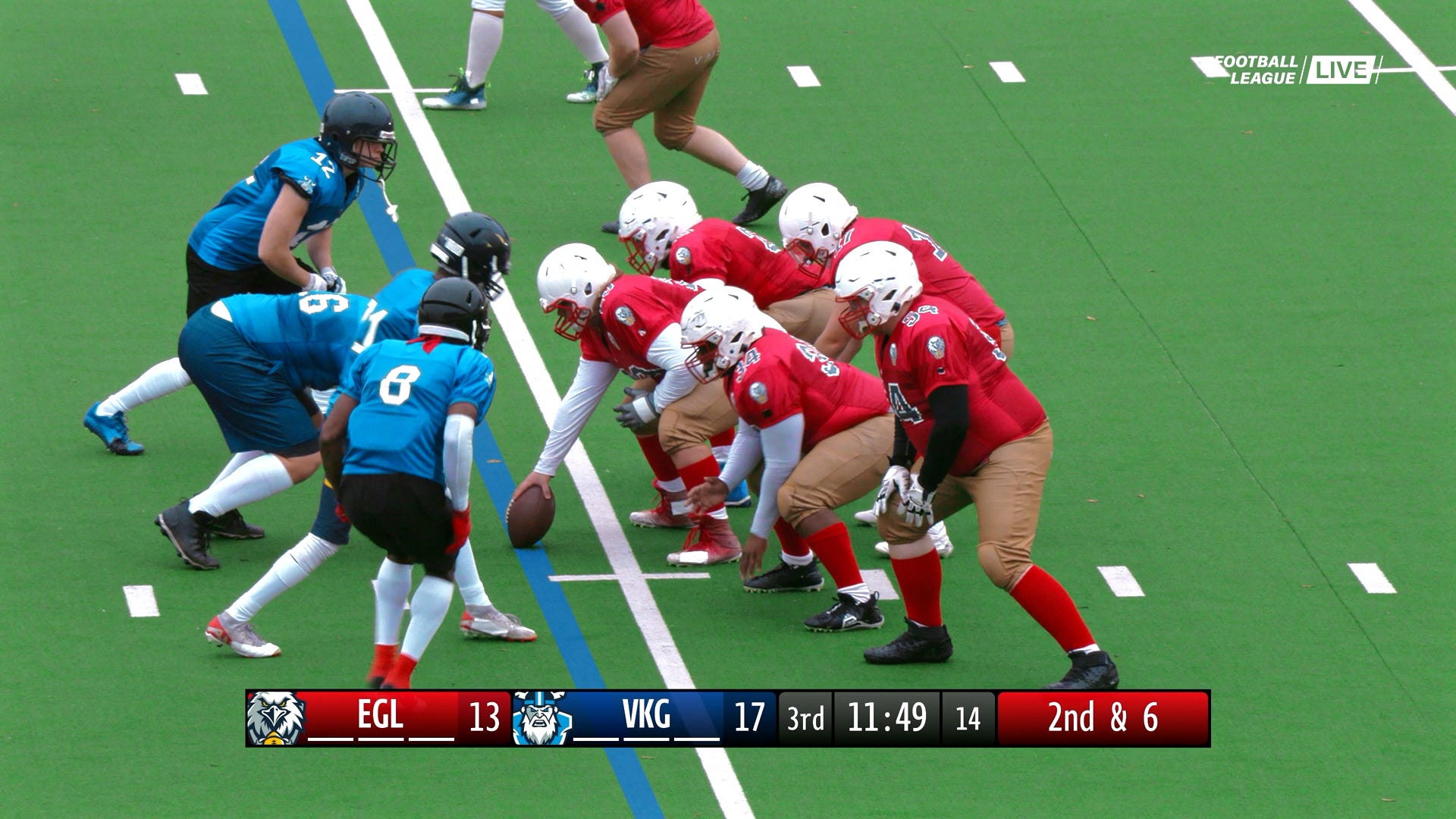
Football may be the quintessential “modern” game. Football is primal, it’s tribal warfare fought with committee meetings (huddles) punctuated by violence. Football’s generals (coaches) direct their “troops” (players). It’s a “ground-attack” (“running game”) combined with an “air-attack” (“passing game”), all directed by a quarterback with a “canon” for a passing arm. It’s hyper-humans performing magnificent running, leaping, catching, tackling, and blocking athletic feats. It’s elegant technologies (instant replay, A.I. feedback) informing coaches’ and players’ decisions. It’s formal blackboard plays (“public governance”) that then blow up with the quarterback’s line-of-scrimmage, last minute “audible,” followed by the hike of the ball and the players’ spontaneous, instinctive, split-second, street-wise reactions (“private governance”). It’s black and white bureaucrat “officials” regulating the game’s “market-play” with “rules” and measuring sticks. And football is all about moving the “pigskin,” an ancient symbol the ritual hunt, down the field.
Football is also a theatre of human desire and power - “fanatic fans(!) put on war paint, they gather “communally” around the sacred “gridiron” and perform bonding and power rituals…the players emerge in fiery explosions to the pounding music of military marching bands and fighter jet flyovers. But unlike the Roman coliseum’s life-death thumbs up-or-down killing, modern football rewards the victors and the losers with sexy diamond rings, massive “capital” wealth, and fame.
So, the fans aren’t just watching and the players aren’t just playing. They’re all re-enacting an ancient warfare ritual. Remarkably, however, for the modern fan, football games actually “sublimate” – they transform and transvalue – our violent and deeply rooted Homo sapien natures into capital value “meritocracies” – the fans spend hundreds (thousands for the “Super” Bowl) to buy tickets and food and beer and swag, the players become multi-millionaires, and the teams are worth billions.

Football creates value – winners – and it destroys value – the defeated. We end up with extraordinarily wild and many would say irrational human “value.” We know that for a fact because other humans are willing to pay billions in “capital” to own a pro football franchise. But the value they’re buying is the consumers’ wild demand – the mystique – the wild desire to experience a universal human drama, and that, many would say, is very sexy! Football is virtualized warfare fought with knowledge and violence for the prizes of power and fame and money.
So, what is football worth? George Halas paid $100 to buy the Chicago Bears in 1920. Today, the team is worth $6-8 billion. “America’s team,” the Dallas Cowboys, is valued at $12-15 billion, and the National Football League (“NFL”) is valued at $228 billion. What has the NFL wildly learned, what does it “know,” to create that wild value? It knows that Americans and now people all over the globe enjoy ritualized communal power displays, hyper-human athleticism, beer and dogs, and violent play.
Like the football label, “money” and “capital” are sexy labels but they don’t capture the human creative-destructive value response, that is, the more or less unrestrained desire to know, to yield power, and to thrive. “Capitalism” and “money” abstract and so hide the raw, wild learning and knowledge and imagination that creates human value plays. This is the magic that lurked in Marx’s “mysterious value forms,” and that would eventually stifle and ultimately outwit his economic theory.
To understand the wild power, the risk as well as the potential of “capital” and “capitalism,” we have to see and live it as the full play of synergistic, hyper-variable and “black box” forces:

ECOLOGY: Capital and money are human value systems that live and play in natural ecologies. Human intelligence, once ecologically threatened with near extinction, has tapped into billions-year-old energy and natural value orders to turn the tables, to reverse the risk equation and now threaten the extinction of the planet’s natural orders.

DEMOGRAPHICS, CULTURE: Humans lived out their universal survival dramas to expand populations and creative-destructive value exponentially into the 21st century’s eight billion. However, mass globalized urbanization is reversing hyper-population growth while dangerously over-concentrating human hyper-activities (e.g., energy demand, pollution, habitat destruction) in mega-cities. And like no other creature in the natural world, and for tens of thousands of years, humans have created immeasurable value by celebrating their existence in the mysterious universe through the practice of sacred faiths and art forms.
TECHNOLOGY: Tech initially emerged as power-tools of environmental adaptation and survival. Humans now invent and deploy tech to create new, hyper-natural capabilities (space travel, pharma, A.I.) which may simultaneously disrupt and destroy previous techs and tech cultures and trigger gaping socio-political asymmetries. Consequently, tech advances ahead of our abilities to manage its practical and cultural impacts.
ECONOMY: Human capital economy has always emerged from the advance, competition for, and exchange of knowledge resources to manage and exploit natural resources: knowledge to survive ice ages and volcanic winters; knowledge to hunt wild animals; knowledge to grow foodstuffs and husband animal resources; knowledge to invent new tools and innovate new strategies and exploit given resources; knowledge to advance science and to fundamentally wonder and explore the physical and metaphysical mysteries of the universe. On the wave of thousands of years of wild learning, often violent competition, and crisis survival, modern humans now deploy complex, globally connected valuation and exchange systems to manage economic values. However, the transformative power of the creative-destructive human value response routinely disrupts and then “transvalues” our definitions, measures of, and existential understanding of value itself. As knowledge economies advance, not only do its commodity deployments change (e.g. from wind and water to steam and fossil fuel power; stone tablets to paper to digitization), but the very measures of value morph imperceptibly over decades or millennia: Small village hundreds of familiar faces, to urbanized thousands-millions of anonymous faces (10,000 years); hunter-gatherer to agriculture (4,000 years); debt-based to coinage-based economy (3,000 years); agriculture to industry (250 years). Economy, like tech, advances ahead of our ability to fully manage legacy or “pay it forward” strategies for our kids.

GOVERNANCE: Humans deploy complex cultural governance systems to attempt to organize and regulate their more or less unrestrained creative-destructive powers and activities. Increasingly powerful demographic, tech, and cultural-economic human value development constantly pressures governance strategies. The governance of this wild value minimally necessitates formal, institutional “public” governance; however, governance optimally thrives with the presence of higher, “spontaneous-value” private governance (e.g., informed and competent citizen response, producer and consumer market-based decisions, corporate governance, and philanthropy). Like other factors, public and private governance lag behind the increasing velocity of change generated by these quantumly entangled and hyper-variable synergies which then periodically trigger finite time singularity crises.

WEALTH: The globalized creative-destructive human value response, “capitalism,” will birth the first trillionaires into our 21st century. Individuals and companies are now more powerful than many nations. Sudden, globally scaled wealth can give rise to income and wealth and therefore cultural and geo-political asymmetries. Because of its more street-wise creativity, private wealth might more quickly advance a “pay it forward” ethical imperative for our kids.

WILD LEARNING: “Wild learning” may be defined as the formal as well as informal, extemporaneous advance of human information gathering, knowledge accumulation, and imagination, from which emerges the creative-destructive human value responses of invention and strategy innovation. This human value response has created its latest creative-destructive apex tool, artificial intelligence (“A.I.”). Human wild learning created A.I. as a “co-intelligence” of itself. However, by itself A.I. cannot embody the imperative for ethical decision-making because it doesn’t have “skin-in-the-game” risk and it doesn’t have kids. Nonetheless, A.I. is already demanding the re-thinking of learning and knowledge value in our knowledge economy and culture. A.I. is a quintessential example of the human creative-destructive value response – it will, like the factors above, create amazing new potentialities but very quickly disrupt and destroy status quos. Wild learning has always been and will continue to be the most essential and valuable “pay it forward” human resource that must be procreated to our kids.
In summary, perhaps our most significant takeaway here is the Geoggrey West team’s observation that 21st century humans should routinely anticipate that the human creative-destructive value response will continue to trigger finite time singularity crises and furthermore that the velocity of these crises will also increase. It may be that the more effective way to read and re-define history is as the series of crises punctuated by the human creative-destructive response to crises.
We may takeaway “capital” and “capitalism” and re-imagine them as the quantum entanglement of the human creative-destructive value response. But, alas, “capital” and “capitalism” will likely remain sexier and therefore more marketable labels.
This “Wild Capital” YouTube is one of a suite of “Wild Globalization” YouTubes.
Visit www.substack.wildglobalization.com for transcripts or our web site at www.wildglobalization.com, and watch for our book out in 2026.