


Introduction
Welcome back to the Wild Globalization Project. Today we’re talking about Wild Sex, Demographic… and Culture.
We’re asking, “How are human demographics wild?” (We threw “sex” in there to get your attention.) So, really, “How do the flows of populations and peoples – their languages... beliefs…their ways – drive our 21st century globalizing civilization? In the big picture, we’re asking, “What’s going on? …How does the world work?" “We are saying that history is evolutionary…and evolution is wild!”
To recall, the WILD GLOBALIZATION PROJECT is wondering if civilization's life-world might not work more like a "BLACK BOX," what modern physics calls a “quantum entanglement.” So, think of rush hour commuters moving in and out or around a modern global city every day – say London’s or New York’s one million commuters, or the 25 million who ride New Delhi’s metro – see their faces, their manners and dress, or listen to them chat about their lives and family, their dreams and fears. If you could see or imagine all those scenes and folks, all at once, what would be your sense, your impression of this human “race?”
So we’re interested in how the human race flows like a wild confluence of rivers – today that means 7,000 indigenous peoples and languages, 195 nations, ten thousand cities, and now eight billion of us roaming the Earth.
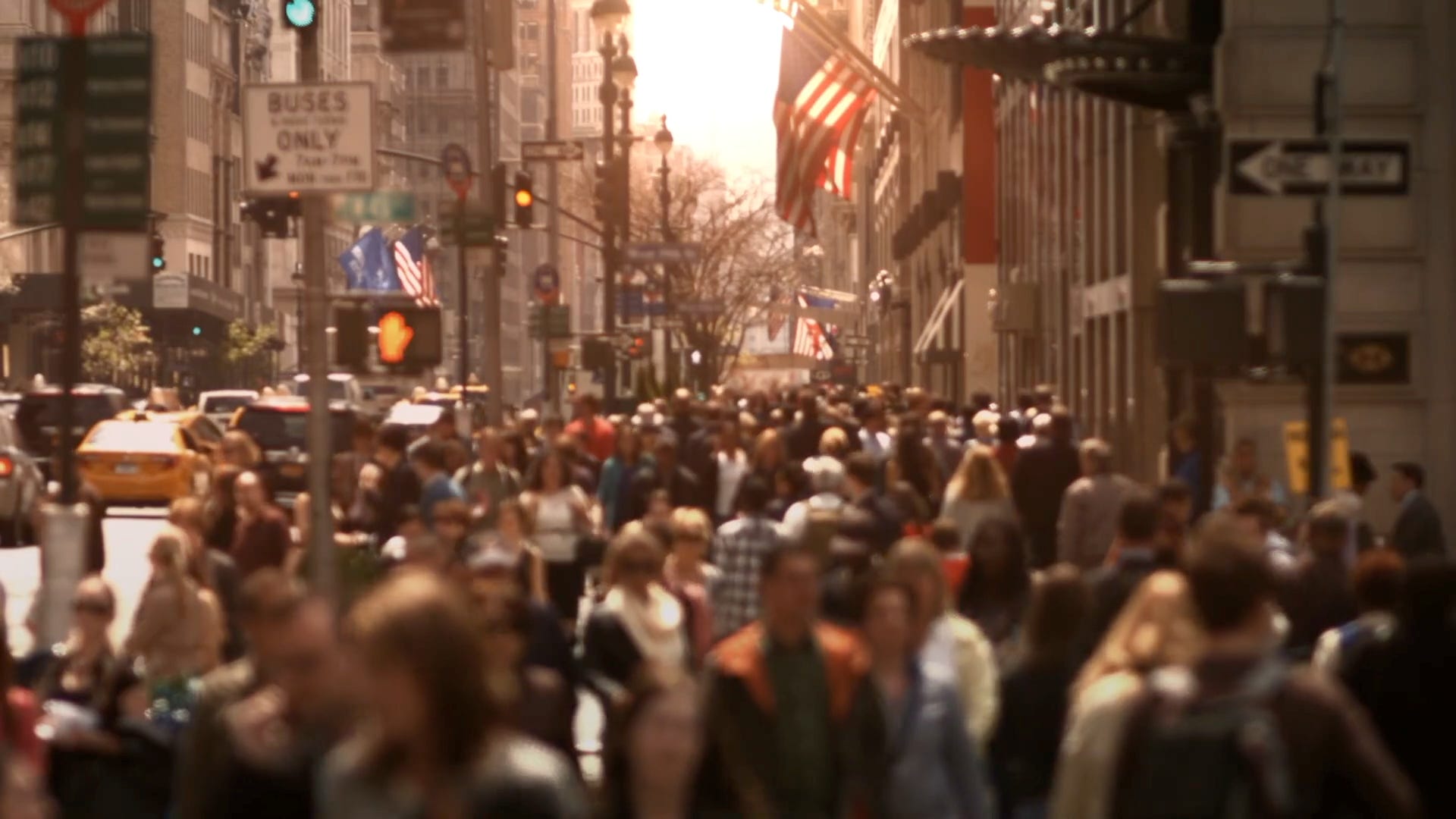
For example, look back at the 20th century. It opened with the promise of a new global prosperity, with burgeoning populations and exciting techs – automobiles, electricity, continental railroads, and telephones. But then “something happened” – the century collapsed into global chaos, warfare, pandemic, and tragically, genocide and environmental destruction – 70-100 million lost in warfare, 50 million in the 1918 global flu pandemic.
But then the century’s second half seemed to pivot. In spite of nuclear and cold war threats, a re-globalizing order brought a “rising tide” of foodstuff abundance, the eradication of many diseases, more nations working together – trading, engaged in global commerce, and building new economic alliances. The Cold War ended. Yet the century’s second half also witnessed millions lost to warfare and wild governance “cultural revolutions” and “leaps forward.” The 20th century was really a see-saw battle between creation (new techs, new economies, more people) and destruction (extreme geo-political-economic breakdowns, famine, warfare).
So here’s our “provocative statement:”
“Humans have not emerged “from the wild.” We are wild Homo sapien. The wild is happening right here and now. We’ve spread over the planet for 250,000 years. Our human “nature” has a history far deeper than smartphone intelligence and social media. We live in the throes of this quantum entanglement of ecologies, demographics and cultures, technologies, economies, governances, and wealth.
To get here we’ve relied on two unique human abilities: First, our ability for social learning and critical thinking, OR NOT! Secondly, our ability to love and care for each other and the planet, OR NOT!
We’re trying to get at things from both inside and outside the “box,” and to somehow think it all at once. How are these entanglements affecting the planet, changing it? And how are we getting kicked around by them?
Finally, we’re observing how globalization and civilization race ahead of our critical thinking, our ethical response, and our common sense. We live in their flows but we also create many of their momentums, momentums that constantly build up, and at the same time, that can breakdown and destroy the orders of life on Earth.”
So today we’re asking, “What’s going on with wild human demographics and cultures in this 21st century?” “What can we, or should we, do about it?”
Finally, we’re keen on, as Uri Levine suggests, “…falling in love with the problem…” rather than getting quick answers. Uri Levine Our Wild Globalization discussion even takes it a step further to say: “…If you’re not paying attention to the problem, living it, even falling in love with the problem, you are part of the problem.”
What is Wild Sex and Demographics?
Wild Demographics: Sex, Violence…and “Hyper-natural” Human Evolution
“SEX…violence……the “human wave” – demographics studies the flow and birth-rates of populations over time. So we can ask, “How are human demographics evolutionary?”
“Sex” seems obvious…or not! When American GIs came home from WWII they had babies, 80 million “baby boomers.” As economist and demographer, Harry Dent, observes:
“When 80 million baby boomers – 10,000 a day – started buying starter homes in the 1970s, housing prices skyrocketed at twice the rate of inflation. Birth charts tell us decades in advance when new generations of consumers will move through predictable spending cycles. …If you remember nothing else, remember this: sex drives our economy – and that’s precisely why economists have never figured it out, and probably never will!
Harry Dent, The Roaring 2000s, 1998
And "violence" runs wild in the human story. As the American evolutionary biologist, Beth Shapiro, describes it:
By 700,000 years ago, lineages belonging to the genus Homo were distributed from Africa across Europe and Asia.…Today, every Homo lineage apart from our own is extinct…our ancestors killed off all the others in Africa, left Africa for Europe where they killed off the Neanderthals, and then spread across the rest of the world killing off whatever remnant populations of non-sapien humans they encountered. …Within the last 50,000 years, our ancestors hunted, polluted, and outcompeted hundreds of species to extinction. They turned wolves into Boston terriers… and wild cabbage into kale, broccoli, cauliflower…Some species survived their encounters with humans, but many did not, and all were transformed in some way. Living things today are as we made them, shaped in part by the randomness of evolution and in part by less random human intent.”
Beth Shapiro, Life as We Made It, 2021
Globalizing civilization has emerged from “wild” human demographics. To survive, humans innovated scarce resources and began to change our world. Through trial, much error and failure, and what we now call “social learning,” humans survived and then thrived by accumulating and building on collective knowledge over 250,000 years and ten thousand generations. Humans became knowledge creatures. They were naturally curious and clever.
But they were also driven, often in desperation, by an indominable will to live. So they invented a new and different order of life. Humans represent the spontaneous emergence of a new order of evolution itself. Let me say that again: “Humans are a new order of evolution.” Their new ways sped up the pace of evolution. But this human version wasn’t “un”-natural. It was endowed by Nature herself. We became “hyper”-natural – nature on steroids.
To survive, humans did at least four things differently: First, they started to walk and run upright (“bipedalism”); Second, with their hands free, they evolved opposing thumbs and digital motor skills; Third, their brains grew larger (“encephalization”); Finally, with these new capabilities they developed survival-driven team-working and language. Knowledge-gathering intelligence expressed in language are the phenomenal differentiators of Homo sapien, and the wildest, most radical evolutionary ploy ever ventured by Nature herself.
We survived, in part, by spreading over the planet. Humans are “globalizers” – we’ve taken over the planet, at least for now.
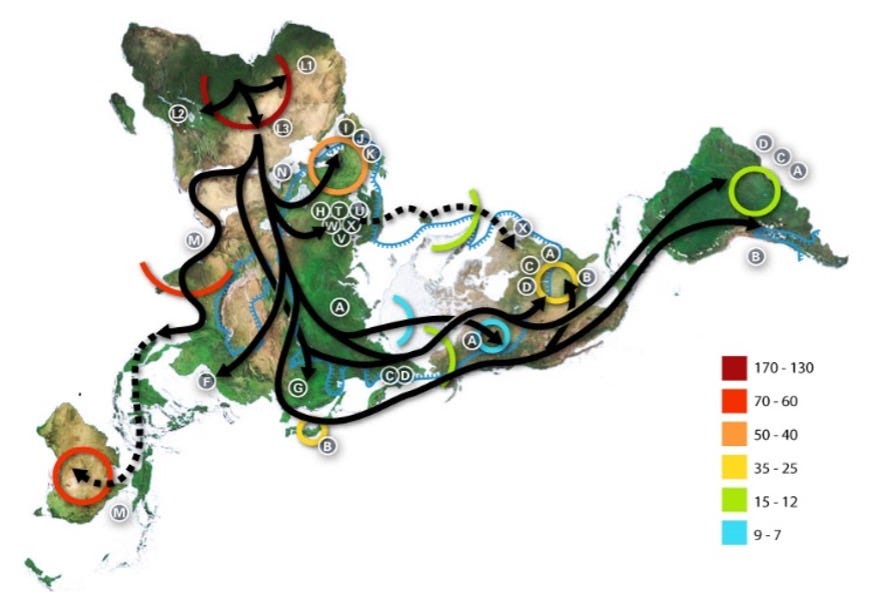
Planet Earth, however, can strike back. Recall the “demographic bottleneck” mentioned a minute ago: the genome data tells us that humans emerged from just a few thousand individuals about 50,000 years ago. Some ecological event or series of events triggered a devastating population loss. Most everyone disappeared. We all live today because of those few survivors.
The bottleneck instructs how human populations, like the dinosaurs, are always at risk to Nature’s wild ecology, to climate, volcanoes, to solar storms or meteors. The Toba super-volcano eruption @74,000 years ago ejected as much as 190 cubic miles or 800 cubic kilometers of sulfuric ash into Earth’s atmosphere causing a global winter. Habitats would have been threatened or destroyed. The 1815 Tambora eruption triggered famines and typhus pandemics In Ireland and Europe. Our 21st century Earth is not quiet – America’s Yellowstone threatens today. And because we’ve become entangled in global supply-chains, we may be at wilder risk than we can know.
Human population flows are wild…and we’ll see in a moment how populations are as wild, or wilder, than ever.
Wild 21st Century Demographics: Cities, Child Labor, System “D”
Millions moving to cities…
In the 21st century, human civilization and demographics have gotten wilder, even dicey and dangerous. We are seeing war break out like volcanic eruptions – Afghanistan, Yemen, Ukraine, and now Israel. We see “Great Financial Crises” (bank failures, hyper-inflation, out-0f-control government debt), and now energy chaos, and global pandemics.
And then, urbanization…cities. Most of us take urban life for granted – 80% of Americans live in cities when just a hundred years ago only 15% of us lived in cities. And in just two more decades, around 2050, it’s expected that 75 percent of the entire global population will dwell in cities.
It’s gets wilder. Every week over one million people are moving into cities, mostly in China, India, Southeast Asia, and Africa. China is building 300 cities. In 2006 the planet crossed the 50% threshold, with more than half of the world’s peoples now living in cities. (Geoffrey West, Scale)
So why are cities and urbanization so important?
Physicist, Geoffrey West, of the Santa Fe Institute, sums it up like this:
“Cities are the crucible of civilization…urbanization has been expanding at an exponential rate in the last 200 years…Cities impact on the environment, health, pollution, disease, finance, economies, energy -- they're all problems that are confronted by having cities…the tsunami of problems and sustainability questions we are facing are actually a reflection of the exponential increase in urbanization across the planet.”
Cities can look like this – so Nairobi, Africa, at night… and then they can look like Nairobi’s Kibera migrant neighborhood. In fact, two different civilizations. Side by side.
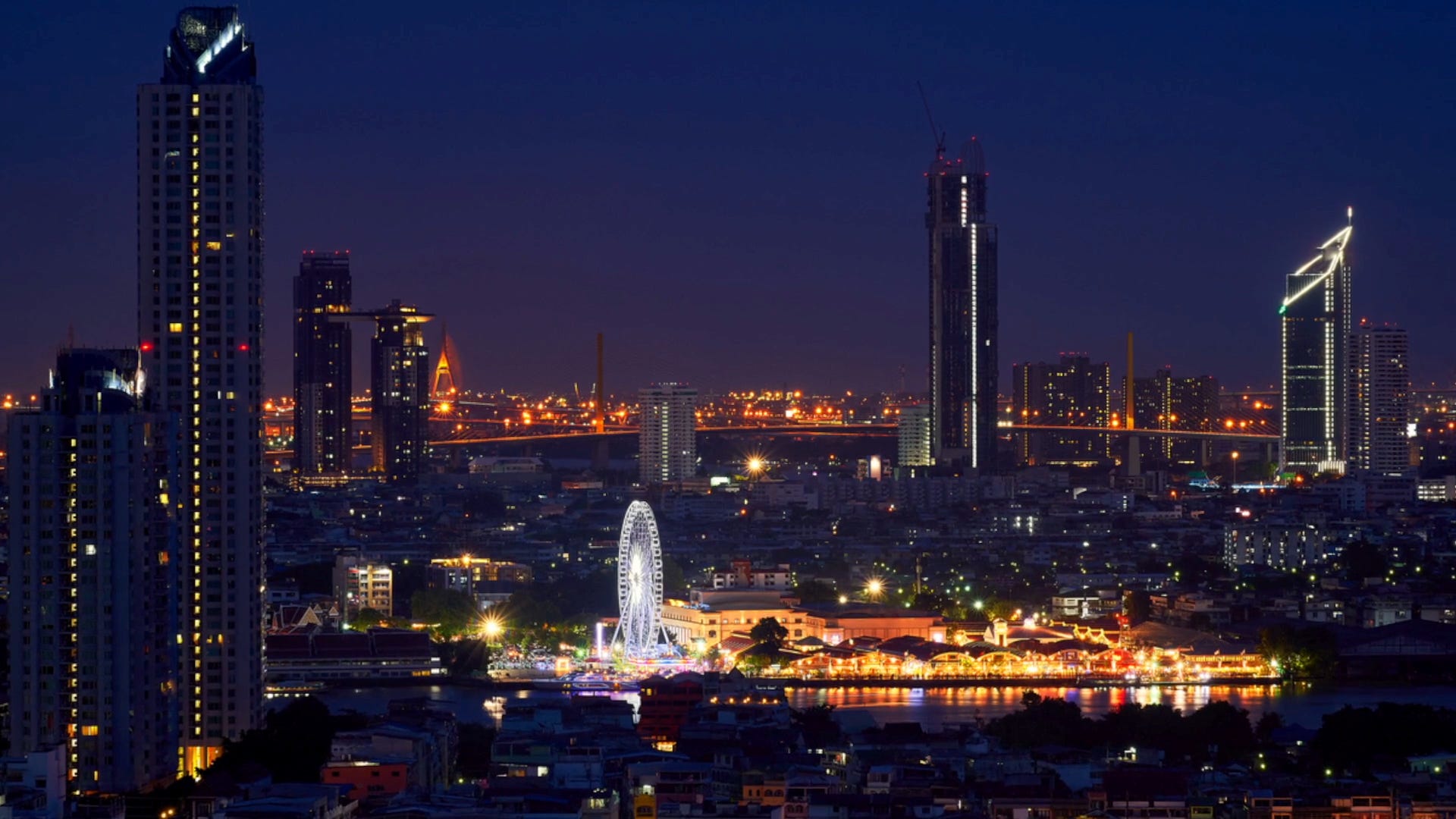
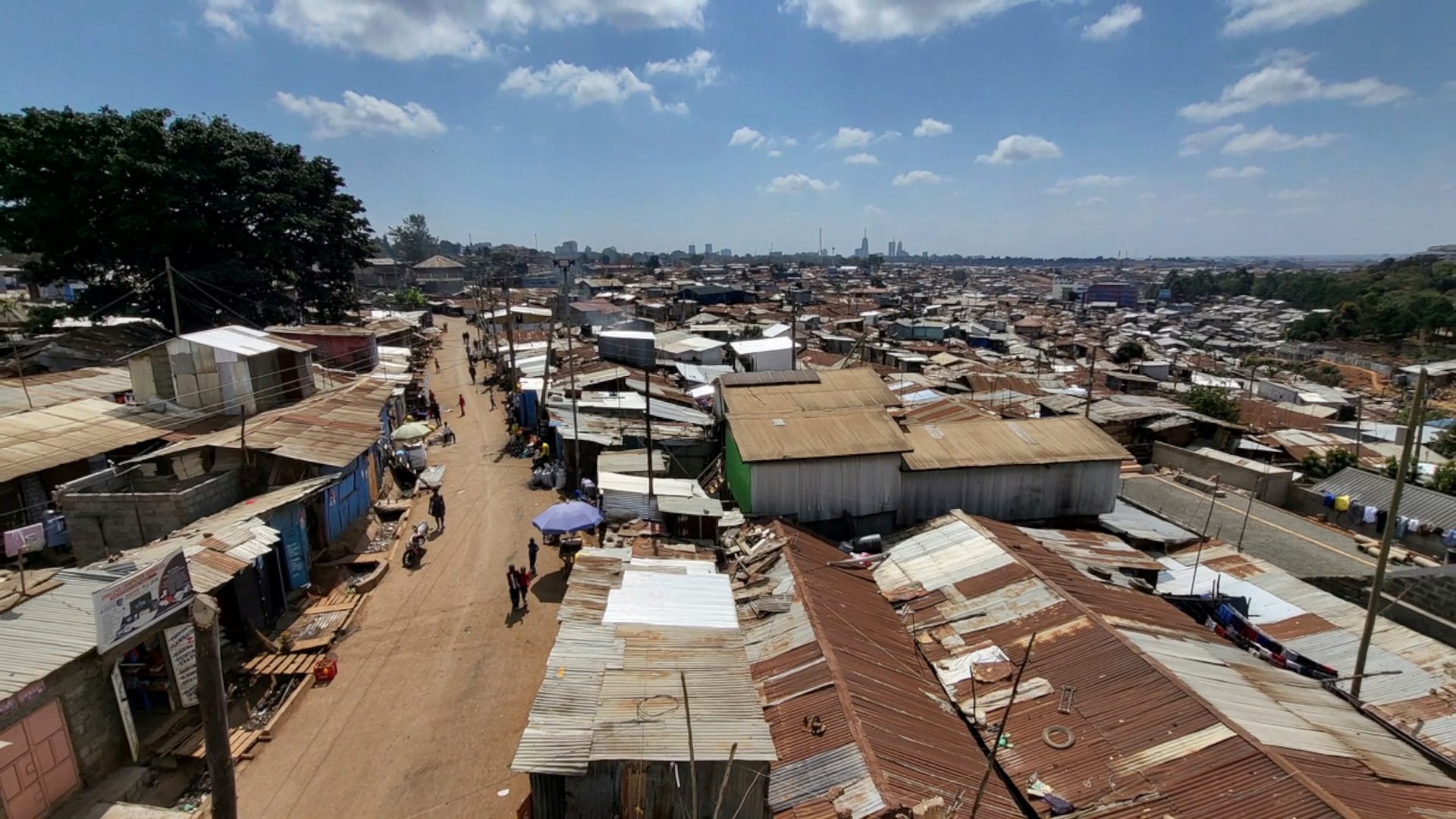
Cities are at the heart of global economics and culture.
The Stealth Economy - System “D”
In this century, global cities and global labor move hand in glove. And they’re both wilder than ever.
So today half of the 21st century global economy is, as Robert Neuwirth observes:
“…the l’economie de la débrouillardise…or, sweetened for street use, ‘Systeme D.’ This essentially translates as the ingenuity economy, the economy of improvisation and self-reliance, the do-it-yourself, or DIY, economy…It used to be that System D was small – a handful of market women selling a handful of shriveled carrots to earn a handful of pennies. It was the economy of desperation. But as trade has expanded and globalized, System D has scaled up too. Today, System D is the economy of aspiration. It is where the jobs are. In 2009, the Organization for Economic Co-operation and Development (OECD)…concluded that half the workers of the world – close to 1.8 billion people – were working in System D: off the books, in jobs that were neither registered nor regulated, getting paid in cash, and, most often, avoiding income taxes.”
So why are these millions migrating to cities? The System D economy is an emerging and spontaneous version of modern urban civilization – it captures the same perils above – disease, pollution, energy demands. But for its travelers it also represents a new destination of risk and opportunity, freedom and possibility, and the chance to make things happen. Geoffrey West formula adds that, “…cities are also the vacuums and the magnets that have sucked up creative people, creating ideas, innovation, wealth…” And instead of happening over 150 years and maybe six generations, like it did in Europe and America, it’s happening in just 50 years and one or two generations.
In a nutshell, folks are seeking “wealth…prosperity…” They represent the omnipresent, emerging, grass roots global economy. Proctor and Gamble reports that most of their new market share comes from their ability to penetrate the micro-kiosks and street businesses of System D. And as System D folks gather in urban centers, they can also be seen spontaneously creating local mini-governances, micro-businesses, and neighborhood infrastructures for streets, water, sanitation. And as we’ll explore in Wild Governance, they’re trying very hard to avoid “big” formal government control and taxation. Half the world’s workers live here. Watch our Wild Economy and Wild Governance YouTubes for more on this.
21st Century Demographic Reversal
Finally, wild human populations may astonish us even more because the “too many people” problem is now morphing into “too many old and not enough young people.” It’s called a “demographic reversal” and it’s caused by negative birthrates.
Still, by 2050 the global population is projected to reach 10 billion. However, as the graph here shows the Global population is actually aging – notice the lower three white bars, age 0-14. They’re shrinking. A “normal” population pyramid would look more like the age 35-44 and then up.
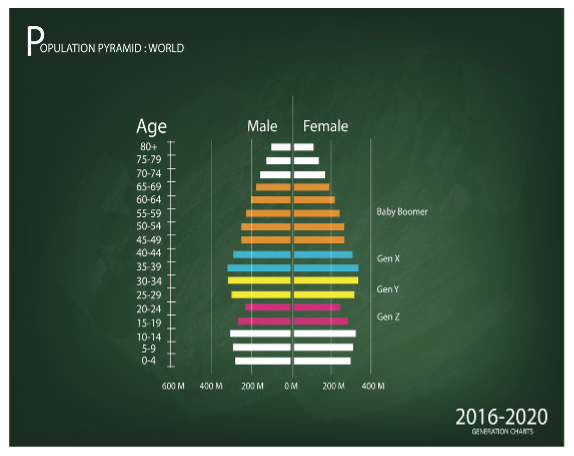
This is a big deal. Birthrates have been negative in Europe and Japan for some time. They’re tending lower in the U.S. China’s birthrate may have gone negative 10 years ago – the most recent census over-counted its population by as many 100 million people.
What’s causing this, and why is it a problem? The answer is urbanization – when one million people move off farms and into cities every week they simply don’t need, or want, as many kids. There won’t be enough young people to pay taxes and take care of their aging parents and grandparents.
It’s a big deal for the global economy as well. The recent 1990-2020 “hyper-globalization” was mobilized by the plentiful and low cost labor supply in countries like China. That’s changing. Quickly.
So the 21st century faces a two-pronged demographic challenge: First, the total population will continue to grow. But at the same time there won’t be as many young workers for labor markets. As Goodhart and Pradhan observe in their book, The Great Demographic Reversal,
The danger facing the global economy is precisely that the economies that have dominated global growth are facing the biggest demographic challenges. And that means even if the world as a whole still faces substantial population growth going forward, the economies that shaped global growth for the last 35 years are the ones which bear the brunt of the demographic headwinds.”
Charles Goodhart & Manoj Pradhan, The Great Demographic Reversal
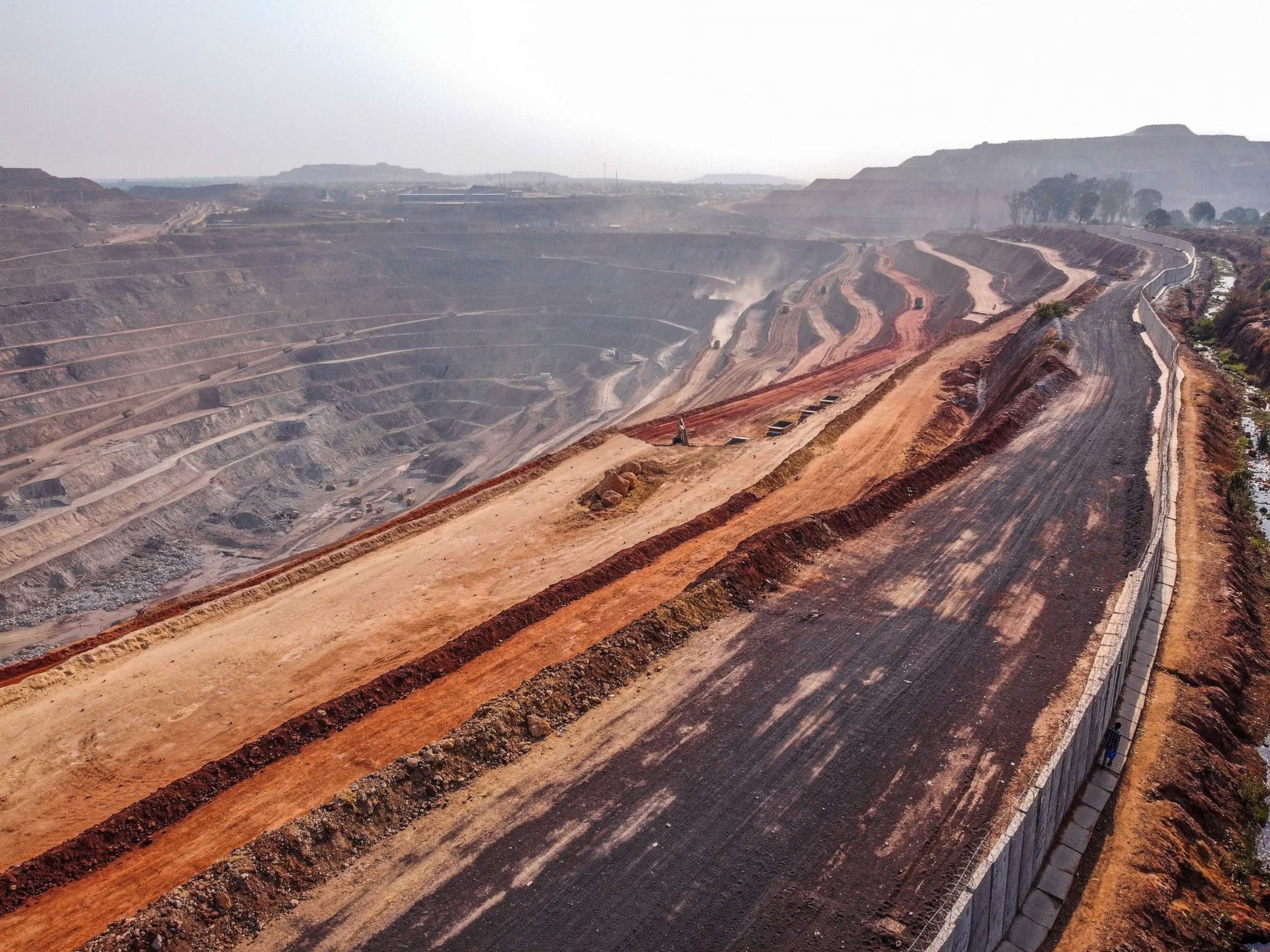
So 21st century demographics are advancing ahead of our governance, common sense, and our ethical response. Moving and hiding in and between the planet’s cities we find human trafficking and child labor on a global scale. The International Labour Organization estimates that the 21st century global economy captures as many as 160 million children in its labor mills, half in hazardous work. International Labour Organization System D may try to stay outside formal governance, but it’s integrated into the high-tech, high-complexity economy anyway – in 2021 75% of the cobalt in our smartphones or EV batteries was sourced from “artisanal,” slave-like open-pit mines in Africa’s Democratic Republic of Congo.
Summary
Quick summary: populations live in crisis.
And yet, at least for now, humans are prospering. Some facts:
From 1950 to 2020 the population-weighted average global income per person rose from $4,158 to $16,904 or +307%.
From 1960-2017 average global life expectancy rose from 52.6 years 72.4 years; in China, from 44 to 76 years; in India from 41 to 69 years; sub-Saharan Africa from 40 to 61 years.
Between 1990 and 2018, global infant mortality fell 55%; in Africa, 51%; in China 91%.
From 1961 to 2017, the average per day food supply per person rose from 2,000 to nearly 3000 calories, or +38%; in China +126%; in India +25%.
Superabundance, Marian Tupy & Gale Pooley
So listen on to our Wild Culture YouTube – it’s the second half of our Wild Sex-Demographics-Culture talk. And it tells the story of how wild populations, all starting from the small band of humans 50,000 years ago, now span the globe, life in the hearts and souls of 7,000 indigenous peoples and languages, in 195 nations, ten thousand cities, and now eight billion of us roaming the Earth.
That’s it for now…take care – it’s wild out there!