


Introduction
Welcome back to the Wild Globalization Project. Today we’re talking about Wild Ecology.
We’re asking, “How is the ecology wild?” “How might the bounties, and the risks, of the Earth’s ecology drive human civilization? How do humans fit in? So, really, we’re asking, “What’s going on? …How does the world work?"
Our WILD GLOBALIZATION PROJECT is wondering if civilization's life-world might in fact work like a "BLACK BOX." In modern physics this is called a “quantum entanglement.”
Imagine a wild river, but then imagine several divergent rivers crashing and flowing together – An Ecology River… …A Sex-Demographics-Culture River…a Technology River…an Economy River…then a Governance River. Each has its own origin and force. Each is carving out canyons, destroying and then building the world back up again. All are wildly inter-, over- and under-flowing, at once, in a total, surging momentum.
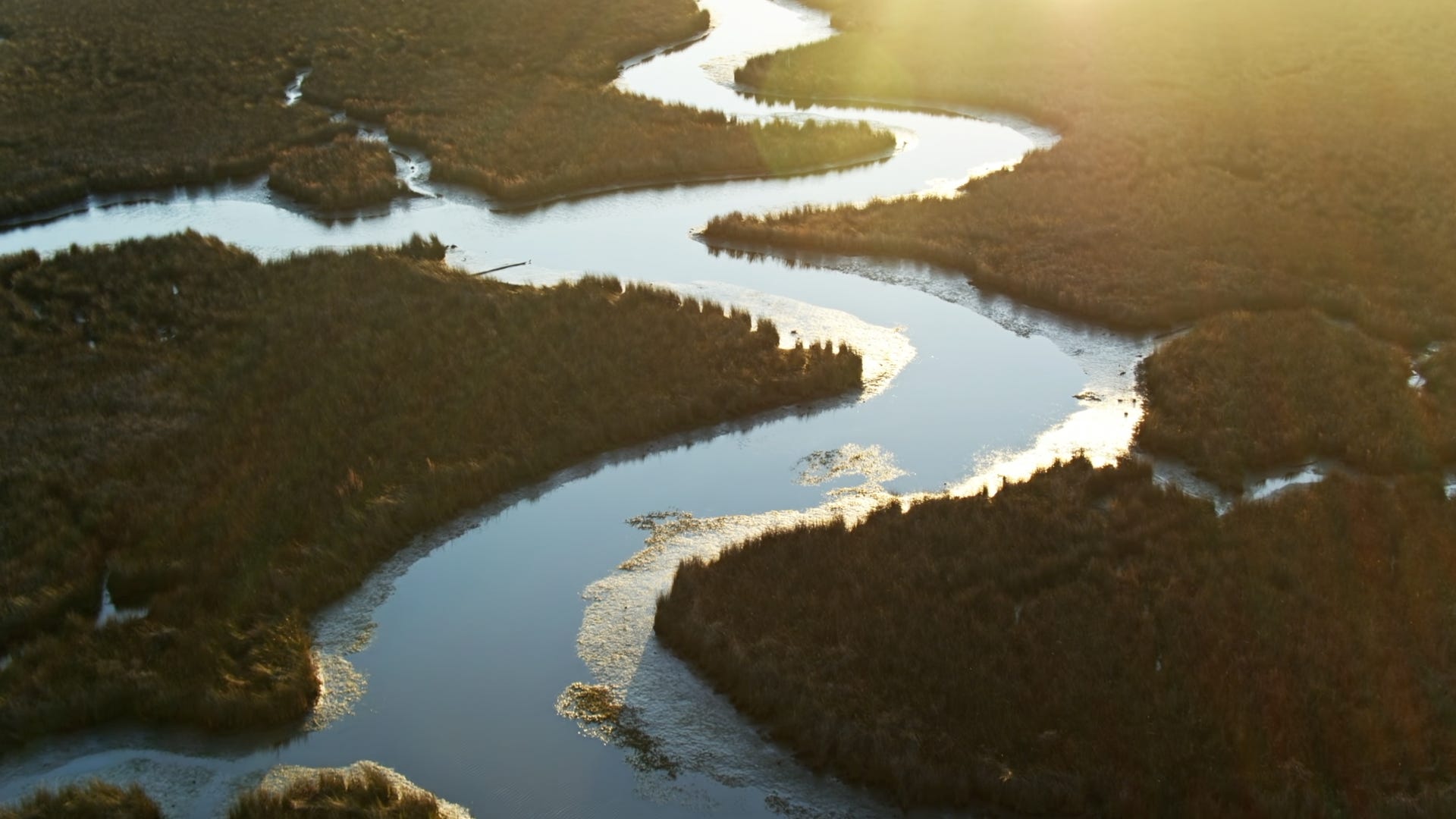
Rivers are a Wild Ecology story. They reveal the Earth’s watery bounties, and her risks. Humans have taken these bounties and changed the natural world – according to the World Wildlife Fund, only a third of the Earth’s rivers today are “free-flowing.” World Wildlife Fund Why is that? It turns out that humans like to eat. And since agriculture began 8-9,000 years ago, human numbers have grown from just two million to eight billion. And we’re healthier and have more to eat than ever. So we need lots of water to grow lots more food. Water gets dammed up and diverted in every way possible. Here in Colorado, 80% of our precious water goes to agriculture.
Wild, free-flowing rivers are powerful and magnificent. But this human quantum entanglement is even wilder…and flowing more freely. The wildest river in the 21st century may be the sacred Jordan River that runs through the Judaic, Christian, and Islamic Holy Lands – wild because, as we speak, it again marks the flashpoint of ancient religious hatreds, bitter fighting, unspeakable atrocities, and the risk of global war. In our quantum entangled world, the Jordan is no longer just a river.
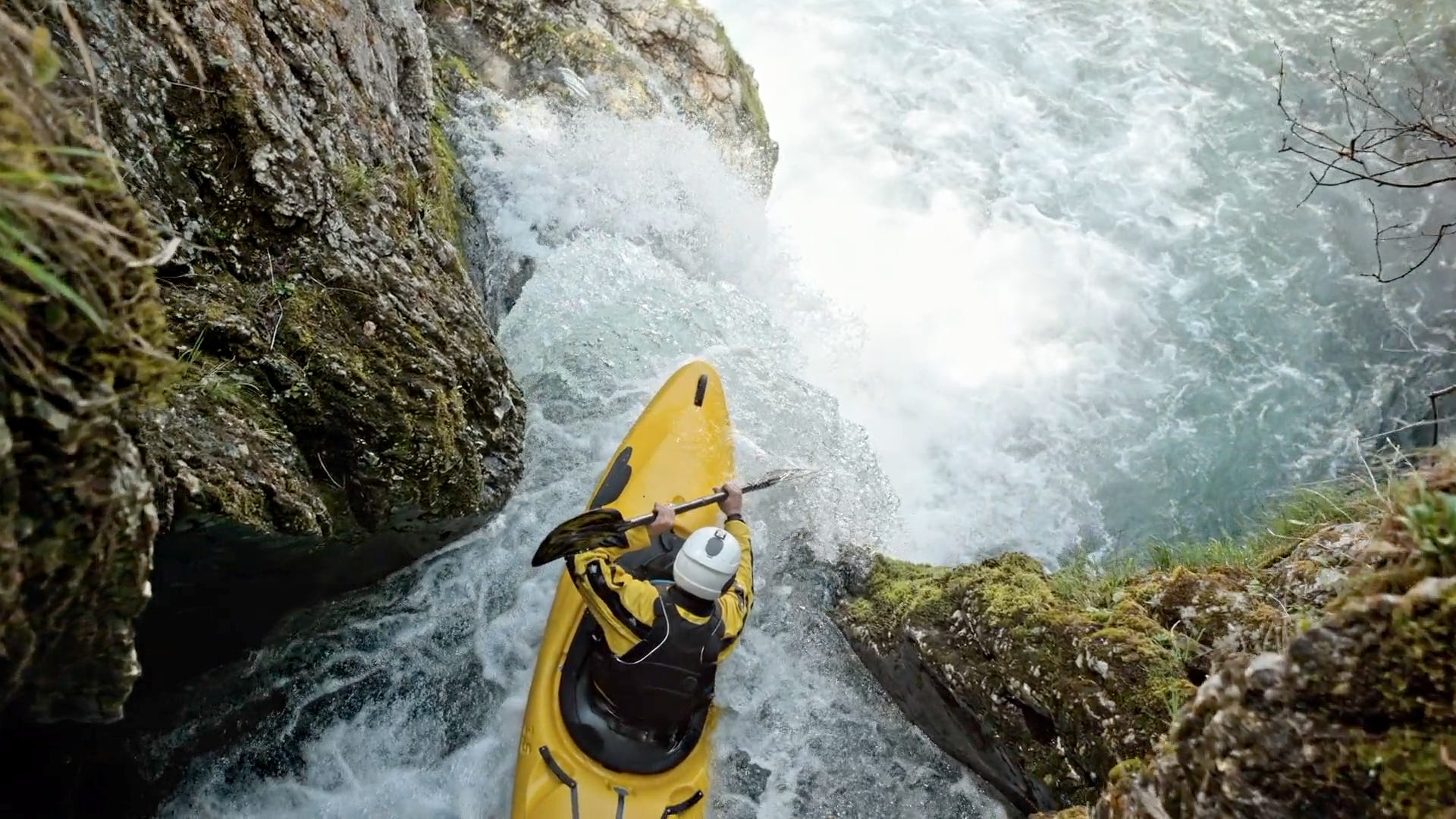
But then, to add to your daydream by the river…wait a minute…there goes a human, steaking by…and…she’s riding…a…KAYAK! Where did she come from…or the kayak…or the paddle?
So where does that leave us? What do we have to work with?
We’re observing that humans have evolved from the natural world by virtue of two more or less unconstrained, unique abilities.
First, we can be smart…OR NOT! Nature has given us – and we’ve worked at it – the ability to think and alter the world around us – someone did come up with the kayak and the paddle! We bundle these abilities under “Science.”
Second, we can love and care for each other and the planet…OR NOT! Humans have the capacity to do good or evil for humanity and planet Earth – we bundle these abilities under our “spirituality,” or, for many, our “faith or religious traditions.”
So we’re asking big questions, questions that probe our intelligence and our conscience. Like, “What is globalization? What do we mean by these “rivers,” these “flows”? – Ecology? Sex-Demographics-Culture? Tech? Economy? Governance? “How can humanity and the Earth survive in this 21st century?” “What’s going on?” And, “What can we, or should we, do about it?”
Wild Globalization doesn’t claim to have simple answers…or any answers at all! As tech entrepreneur, Uri Levine, suggests, we’re just trying to “…fall in love with the problem.” Uri Levine We’re trying to come up with conversations – OK, maybe some healthy arm-wrestling – that might lead us to, let’s just say, better critical thinking.
Our “provocative statement” is this: “Humans have not just emerged “from the wild.” We are wild Homo sapien, and we’ve spread ourselves over the planet for 250,000 years. The wild is happening right here and now.
We’re living this quantum entangled set of momentums. To get to the 21st century, we’ve relied on our critical thinking, but really our persistent re-thinking. Our project is trying to live it and think it from inside and outside the “box.” From different angles and takes: Ecology…Culture…Tech…Economy…Governance. And somehow think it all at once. How is this entanglement affecting the planet, changing it? But then, how are we getting kicked around by it? Like the kayaker, we’re launching into these wild, entangled flows of energy that constantly create and build, and at the same time that breakdown and destroy, the orders of life on Earth.”
This Wild Ecology YouTube video is part of a suite of several “Wild Globalization” talks. Click the link below to watch the video now.
What is Wild Ecology?
“Ideas are peaceful. History is violent.”
Tank Commander Don “Wardaddy” Collier, in the 2014 movie, Fury
Our globalizing life-world lives in a “wild,” and violent, ecology.
Blue, watery, planet Earth, glistening, resilient in her Solar System - Milky Way Galaxy - Universal dark home, is carried by uneven momentums of an original “Big Bang” event.
"Warriors sang their "brave song" Hóka hé! This life will not last forever...Take courage, the Earth is all that lasts...!"
Oglala Native War Cry
We still live in the Big Bang’s “hidden” energy that sounds like a quiet “hiss” on radar. This leftover energy was discovered serendipitously in 1965 by two Bell Lab astronomers when they were cleaning bird poop from their radars – as Nassim Taleb’s Black Swan describes it,
“It took a while for them to figure out that what they were hearing was the trace vibrations of the birth of the universe, the cosmic microwave background radiation (“CMB”).”
Nassim Nicolas Taleb
So where do humans, Homo sapiens, fit in? If Earth’s 4.5 billion year history were imagined in a 365 day year, then we’ve been around for about 250-500,000 years, or roughly an hour. We’re barely a blip on the geologic clock:
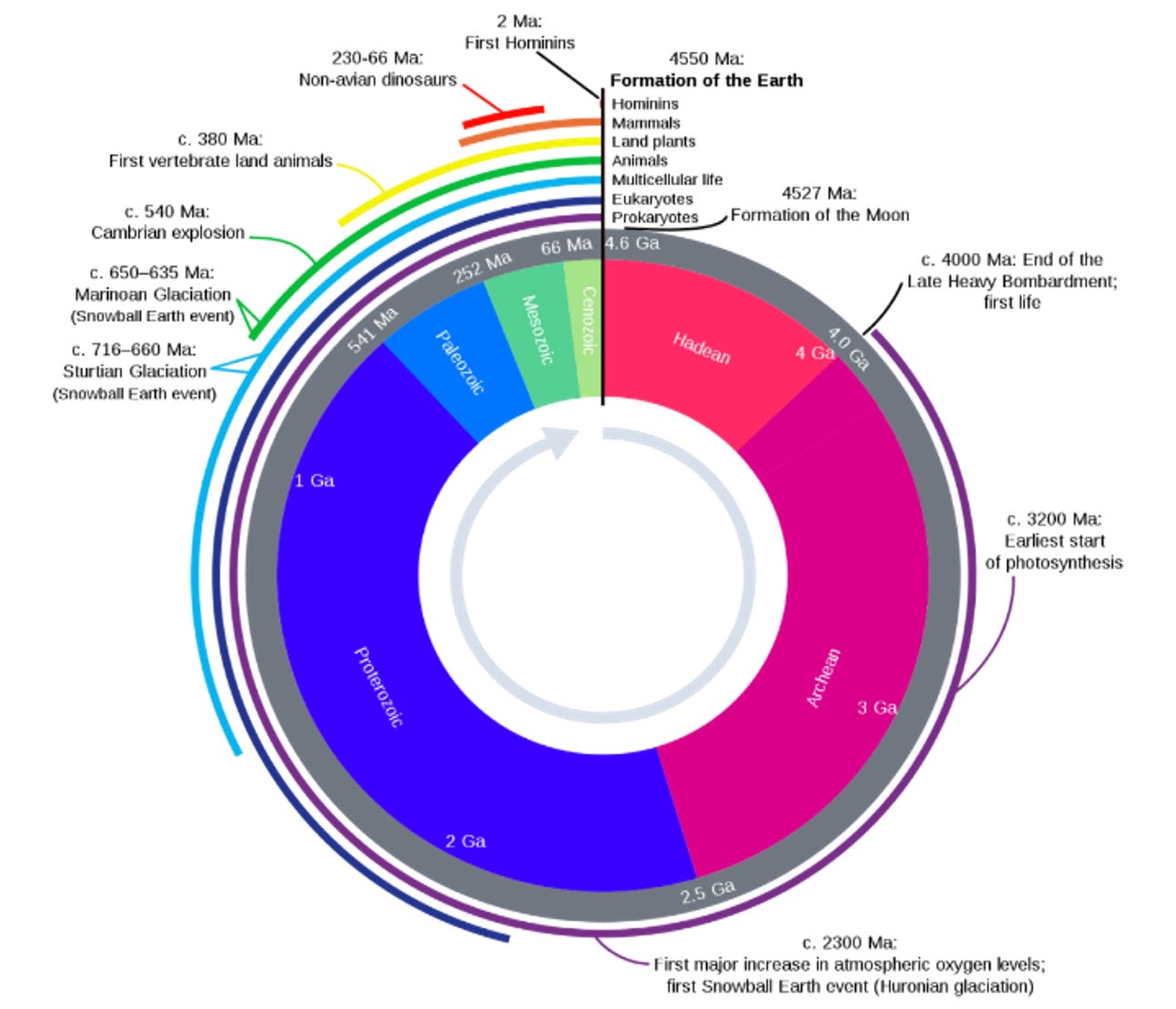
The Wild Globalization Project considers Wild Ecology from deep and original “big orders” which make, or can break, life on Earth: Energy Orders; Big Climate, Super-Volcanoes, and Dark Matter.
Earth’s Energy Orders
Mark Mills and Peter Huber tell the story of “energy orders”:
“Starting from nothing 4 billion years ago, life somehow contrived to capture high-grade energy from here and there and used it to assemble more life — so successfully, in fact, that life, a very complex form of order, now covers the planet. A second chain reaction of increasing order got started with the dawn of agriculture, about eight thousand years ago. Human societies began selectively planting and breeding crops to capture solar energy systematically, and they used the expanding supplies of energy mainly to breed more people, who planted more crops. Humanity’s total energy consumption doubled about every five to ten centuries, in step with the (slowly) rising population.”
Huber & Mills
Energy is a big story. To understand Earth’s 4-5 billion year stream of life we have to think beyond raw energy itself and talk about energy ordering, or the capture and organizing of energy concentrations. We actually live in an energy oasis that continues to gather energy.
So what is “energy order?” In 2003 total U.S. raw energy consumption (oil, coal, natural gas, nuclear, hydro, wind, solar, wood) was equal to @100 thermal “quads” – a quad is one quadrillion British Thermal Units or “BTUs. However, only 6 quads actually achieved “highly ordered” status that could power our lives and devices – the other 94% was consumed in finding and getting the energy to us – so the “ordering” of energy itself.
21st Century Homo sapiens have climbed to the apex of the Earth’s energy and food supply chains. But that also means we’re almost totally dependent on those supply-chains. We survive and thrive, or not, in an energy-food-chain that works like this:
Earth’s vegetation gathers the Sun’s energy >>>
Herbivores eat plants and capture @10% of plant-energy >>>
Humans live on mostly the herbivores and vegetables >>>
Apex humans convert food energy into intelligent “knowledge.”
Or not!
Thomas Sowell, the brilliant American economist, sums it up when he observes that,
“The cave peoples had the same natural resources at their disposal that we have today, and the difference between their standard of living and ours is a difference between the knowledge they could bring to bear on those resources and the knowledge we use today.”
Thomas Sowell, Knowledge and Decisions, 1996
Knowledge of energy order, then, is the key. Modern physics’ First Law of Thermodynamics makes clear that energy can neither be created nor destroyed, it can only be “transferred,” as in the transfer of heat or temperature between systems. Energy can also be reserved, as in the bonds between the hydrogen and carbon atoms of the hydrocarbon molecule. When the atomic bonds are disturbed and broken, heat (energy) is released.
The Hubble and Webb space telescopes are watching the ebb and flow and creation of the Universe, virtually from the Big Bang. But they’re really watching the flow of energy. And if the First Law is correct, there’s really no more energy available today than at the beginning of the Universe. We’ve just figured out how to exploit Nature’s order of energy resources.
Energy order and efficiency usually improve over time. Modern passenger aircraft are three times more efficient than earlier models. But here’s a catch. More efficiency means lower cost so more folks can fly around. Better aircraft haveincreasedenergy demand. Our smartphones and laptops are far more efficient than earlier versions. Still, as Mark Mills reminds us, “The global information infrastructure…which didn’t exist just decades ago…now uses twice as much electricity as the entire country of Japan…” Mark Mills, The Cloud Revolution, 2021
So human energy demand is increasing. In 1990, 70% of people had electricity. Today, and with 3 billion more of us running around, 87% have it. Amazing! But nearly a billion folks are still waiting for it.
And human energy ordering can always improve – we’re still getting 3 times as much energy from burning wood as we are from the new wind and solar techs.
The bottom line is this: Since the Industrial Revolution began in the 1800’s, the order and size of civilization has exploded. Exponentially. From a billion to 8 billion people on the planet. All demanding energy. The secret sauce of it all is that we’ve mobilized high-energy technologies into globalizing markets. We can’t overlook how it’s all powered by the incessant human demand for energy.
As the futurist thought-leader, Alfin Toffler, reminds us,
“The precondition of any civilization, old or new, is energy.”
Alvin Toffler, The Third Wave, 1980
“Big” Climate
Ice…Optimums…Wild Climatology…Solar Storms…
So let’s talk about ‘Big Climate.”
James Croll, who lived from 1821-1890, was a 19th century insurance agent, hotel manager, and then museum janitor at Glasgow’s Andersonian University in Scotland.
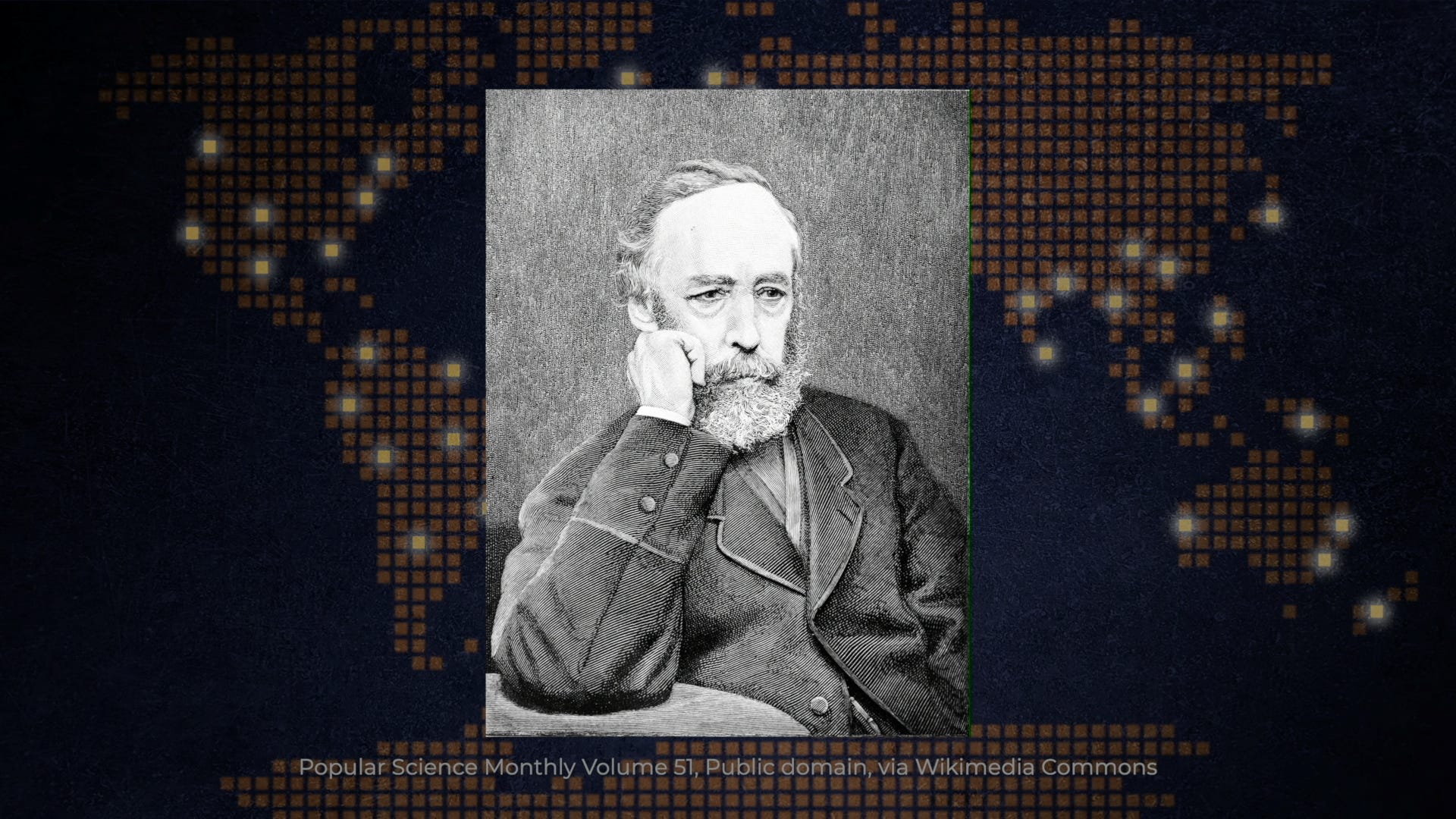
Croll was also a self-educated scientist who thought about “big climate.” He noticed three changes, or “oscillations,” in the Earth’s movement as it orbits the Sun. First, Earth’s elliptical orbit oscillates in roughly 100,000 cycles. Second, Earth’s axis spin or “precession” oscillates in @21-26,000 year cycles. Finally, the Earth’s tilt varies in 41,000 year cycles. Croll thought that these cycles triggered significant variations in how the Sun’s energy is absorbed by Earth’s atmosphere, variations that can cause “big climate” swings, indeed, thousands of year swings, including ice ages. Croll’s theory was finally verified in 1976 by the Serbian scientist, Milutin Milanković and today scientists study the Milankovitch Cycles:
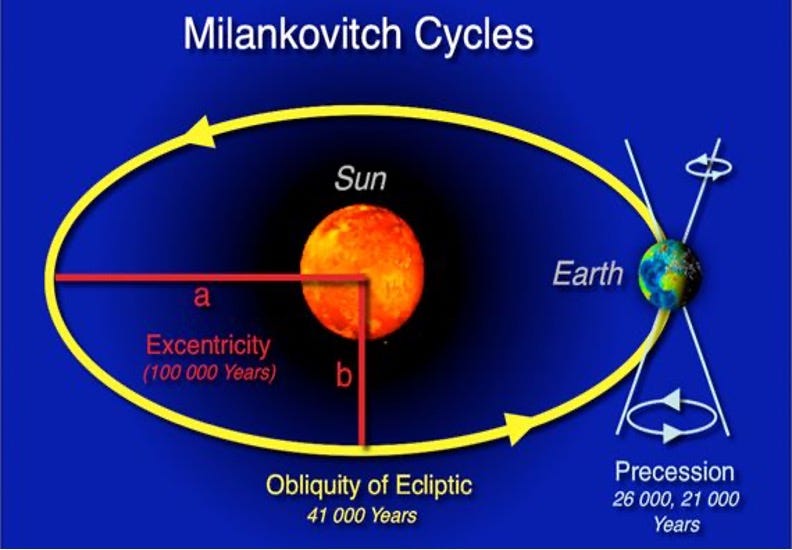
“Big” climate has changed wildly over time. The study of climate may be even wilder.
Meteorologists track roughly 150-200 years of weather-data. They are especially concerned about the industrial age’s warming “greenhouse effect” caused by carbon dioxide (C02) emissions into the atmosphere as humans burn coal, oil, and natural gas. If you’ve skied Colorado the past 50 years you just know it’s warmer.
And then there’s climate science’s other data-set, paleoclimatology, or “old climate.” Paleo-climatologists study prehistoric climate – data from thousands, even millions of years ago. Data that tracks the Milankovitch Cycles. And the ice ages. From a wider angle view, they’re reminding us of the remarkable fact that all of human civilization’s 10,000 year climb out of the stone ages has happened during an “interglacial climate optimum,” so the 10-15,000 year periods between ice ages when Earth’s climate warms up and the ice pulls back.
Ice ages have been around for at least two, but maybe even 40 million years. And, as a 2016 Potsdam Institute for Climate Impact Research describes them,
“Like no other force on the planet, ice ages have shaped the global environment and thereby determined the development of human civilization.”
Just 20,000 years ago, the 10,000 foot deep Laurentide Ice Shelf covered Canada and carved out the Great Lakes. How would 8 billion humans survive, or grow enough crops, under a new ice age?
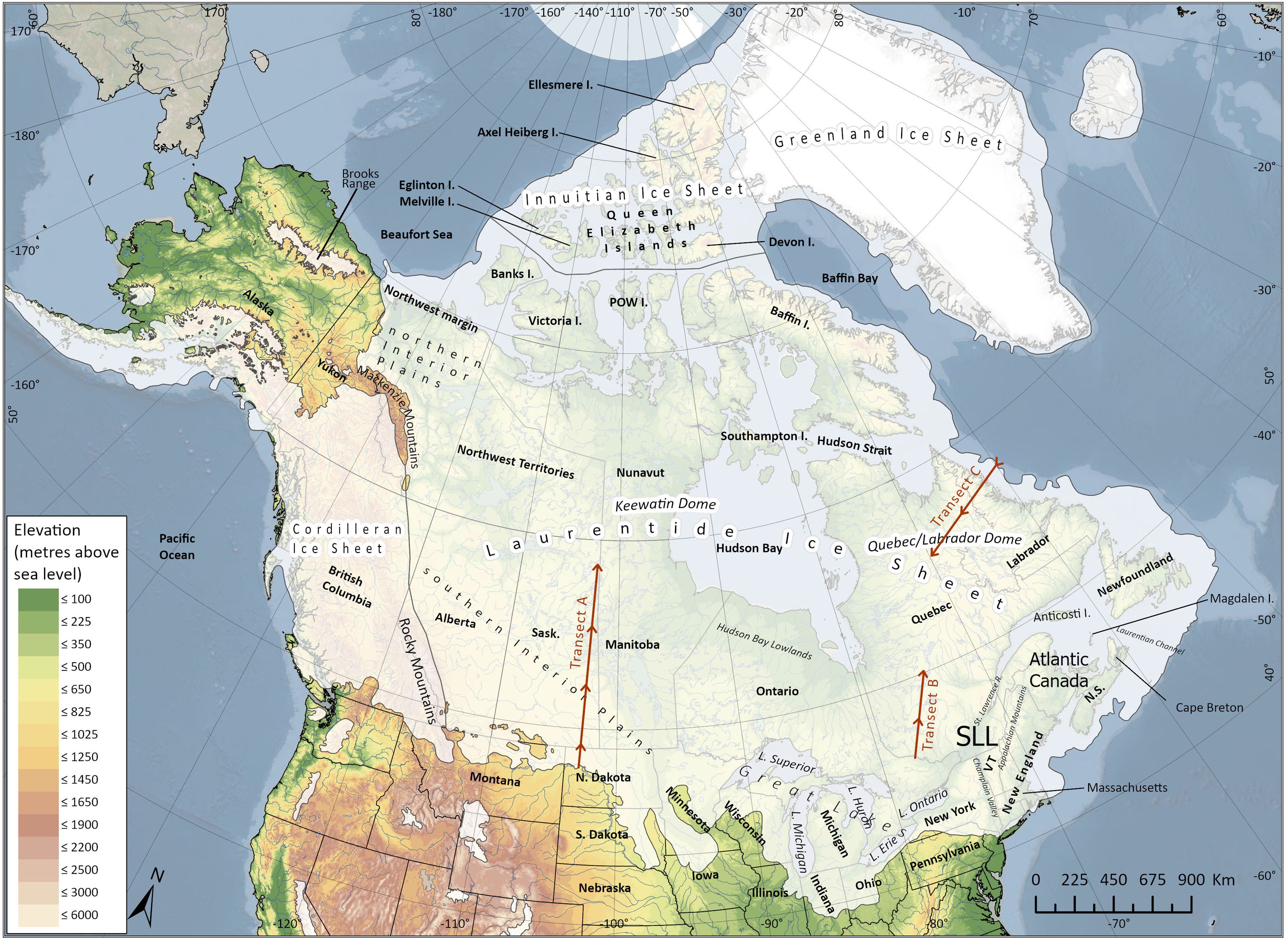
But wait a minute – it may be getting even wilder! That same Potsdam study suggests that together both Nature along with humans burning stuff may allow the Earth to skip the next ice age: They speculate that
“Even without human climate change we would expect the beginning of a new ice age no earlier than in 50,000 years from now… However… relatively moderate additional human-caused CO2-emissions are already sufficient to postpone the next ice age for another 50,000 years [so] we are basically skipping a whole glacial cycle…It is mind-boggling that humankind is able to interfere with a mechanism that shaped the world as we know it.”
Potsdam Institute for Climate Impact Research
Wild “big” climate, indeed!
And, it turns out, C02, carbon dioxide, may not be all bad. CO2 helps us grow lots more food. As we noticed above, humans need lots more food. Craig Idso of the Center for the Study of Carbon Dioxide and Global Change reminds us how thousands of laboratory and field studies demonstrate that higher levels of CO2 significantly improve crop production:
“As the CO2 concentration of the air continues to rise in the future, this positive externality of enhanced crop production will benefit society in the years, decades and even centuries to come.”
Craig Idso, The Positive Externalites of Carbon Dioxide, 2013
Healthier plants need less water so it’s good for our wild rivers. Bottom line: C02 may warms things up…but it also appears to grow more food with less water.
To be clear, we’re not taking sides here. It’s clear that climate is a big deal, especially as human emotions and politics get mixed in. But we’re wondering if folks are reading all the data-sets?
The climate sciences, it turns out, cover a wide and growing range of subdisciplines. Climate science is really a quantum entanglement of data and competing knowledge. No single scientist or study has it figured out. Robert Carter, the Australian paleo-climatologist, cites at least one hundred climate change subdisciplines and he observes that, after a lifetime of distinguished labor in the field, he can claim expertise in no more than two or three. (Robert Carter).
For perspective, look at John Garrett’s one million year snapshot of Hominid evolution.
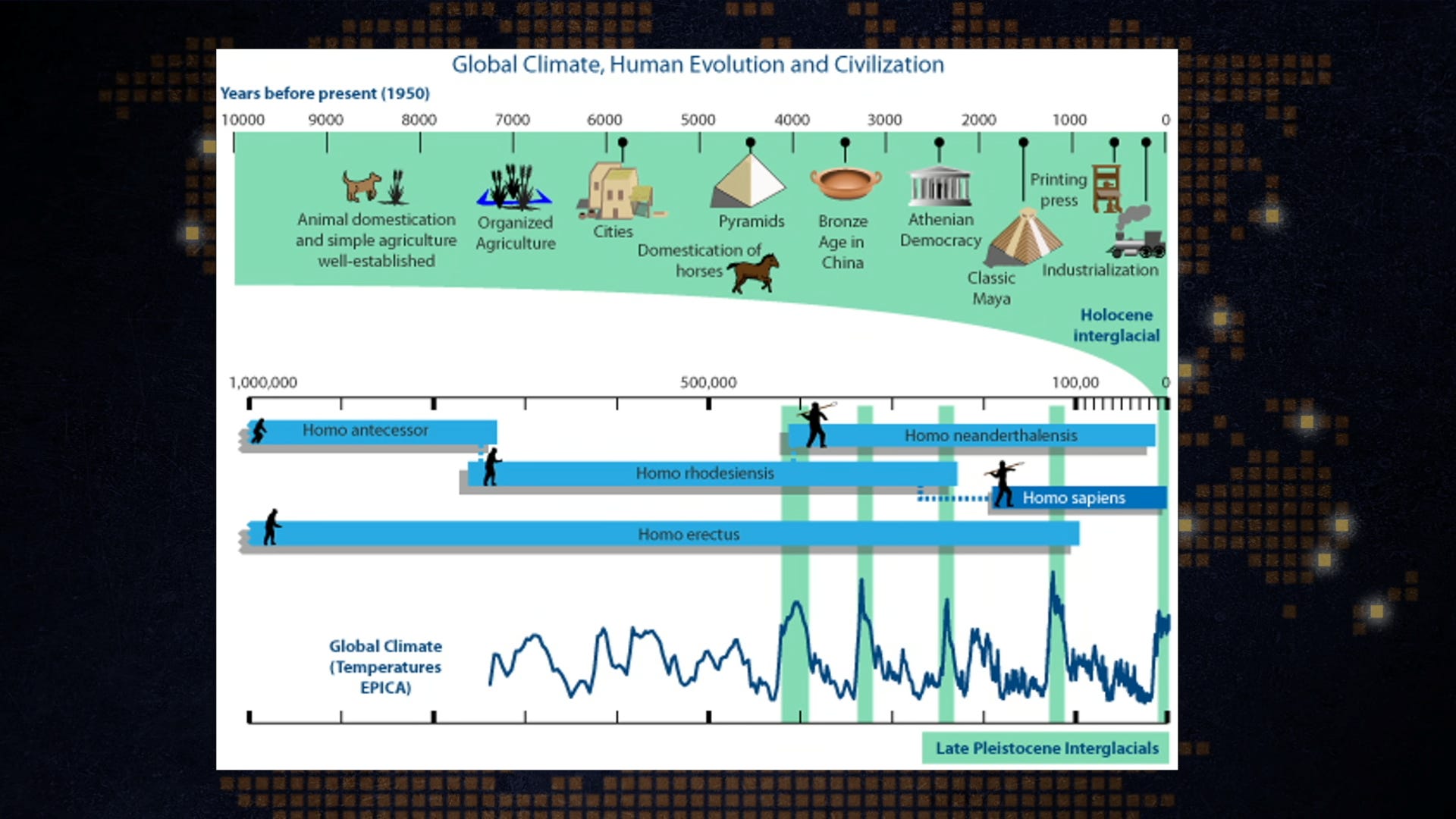
Civilization emerges in the Holocene warm period, the vertical green blip in the lower right. The chart’s top, green half tracks the one hundred century run from agriculture to industrialization and our 21st century. But also notice the wild temperature changes on the bottom graph, which tracks the last million years. It’s wild climate, wild climate optimums, and wild human evolution – from ice and fire and goats to atomic energy and smartphones in just 10,000 years.
But wait! There’s also the Sun’s “big” climate to consider. We’re all excited about solar energy. But the Sun is crazy wild. Consider the 1859 Carrington “geomagnetic storm” of solar radiation that rained over the Earth and was so powerful it took down electric and telegraph services.
https://en.wikipedia.org/wiki/File:X-class_flare_Aug._9,_2011.ogv Attribution: NASA/Goddard Space Flight Center, Public domain, via Wikimedia Commons
A Carrington event in today’s complex, micro-processed world would destroy satellites, communication and power grids everywhere – so your car, your smartphone, your laptop could all be toast! Bill Murtagh, director of the Space Weather Prediction Center here in Boulder, Colorado, admitted that
“a Carrington level event could be catastrophic for Earth…and we’ll not even get a long enough warning to prepare ourselves.”
HT Tech, 08-31-2022
“Big” Fire - Volcanism
Next, consider volcanoes and especially super-volcanoes that randomly dot Earth’s landscape, hide under her oceans, and violently threaten life on Earth. The 1980 Mt. St. Helens event was the largest in U.S. history, but on the Volcanic Explosivity Index it’s just a fraction of Pinatubo (10X greater in 1991) or Tambora (100X greater in 1815) or America’s Yellowstone (1000X 640,000 years ago) (Matt Volz, AP).
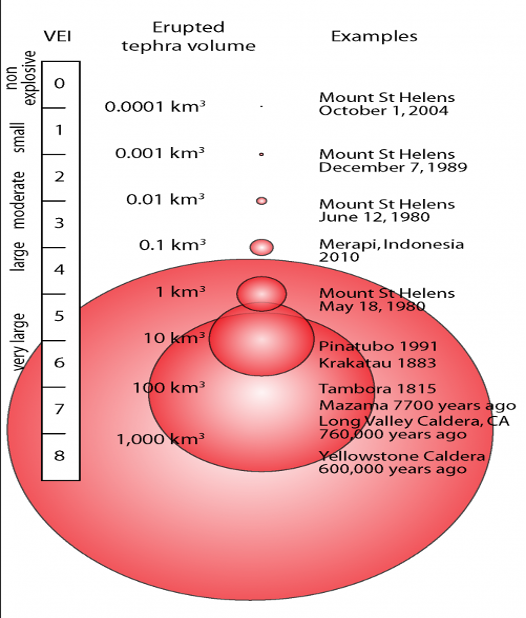
Yes, Yellowstone, the largest known volcano on the planet, just up the road from here.[GB1] It’s at least 2-3 million years old, so humans have lived through its violent eruptions.
What’s a super-volcano eruption like? A super-volcano event ejects cubic miles of volcanic materials like sulfuric gases into the atmosphere. This can then cause “volcanic winters” which trigger loss of habitats and the sudden disruption of food supply chains. Famines to be concise. The 1815 Tambora event may have taken as many as 100,000 Irish and 200,000 Europeans from famine and the ensuing typhus pandemic.
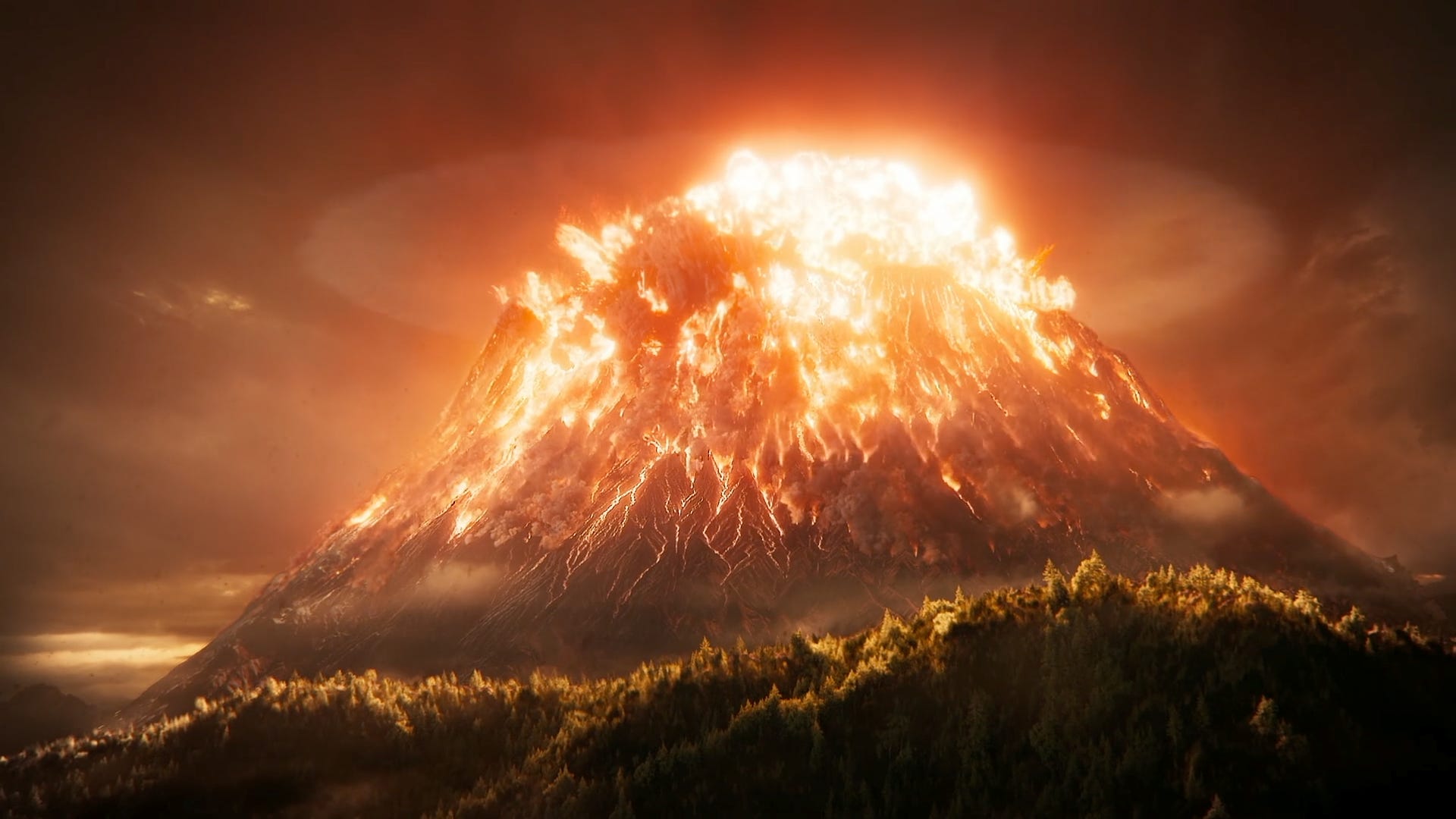
The simple Wild Ecology fact is that 21st century humans, living in our global food and energy supply chains, and now dependent on fragile technologies – remain at far wilder risk than we may realize.
Wild Darkness
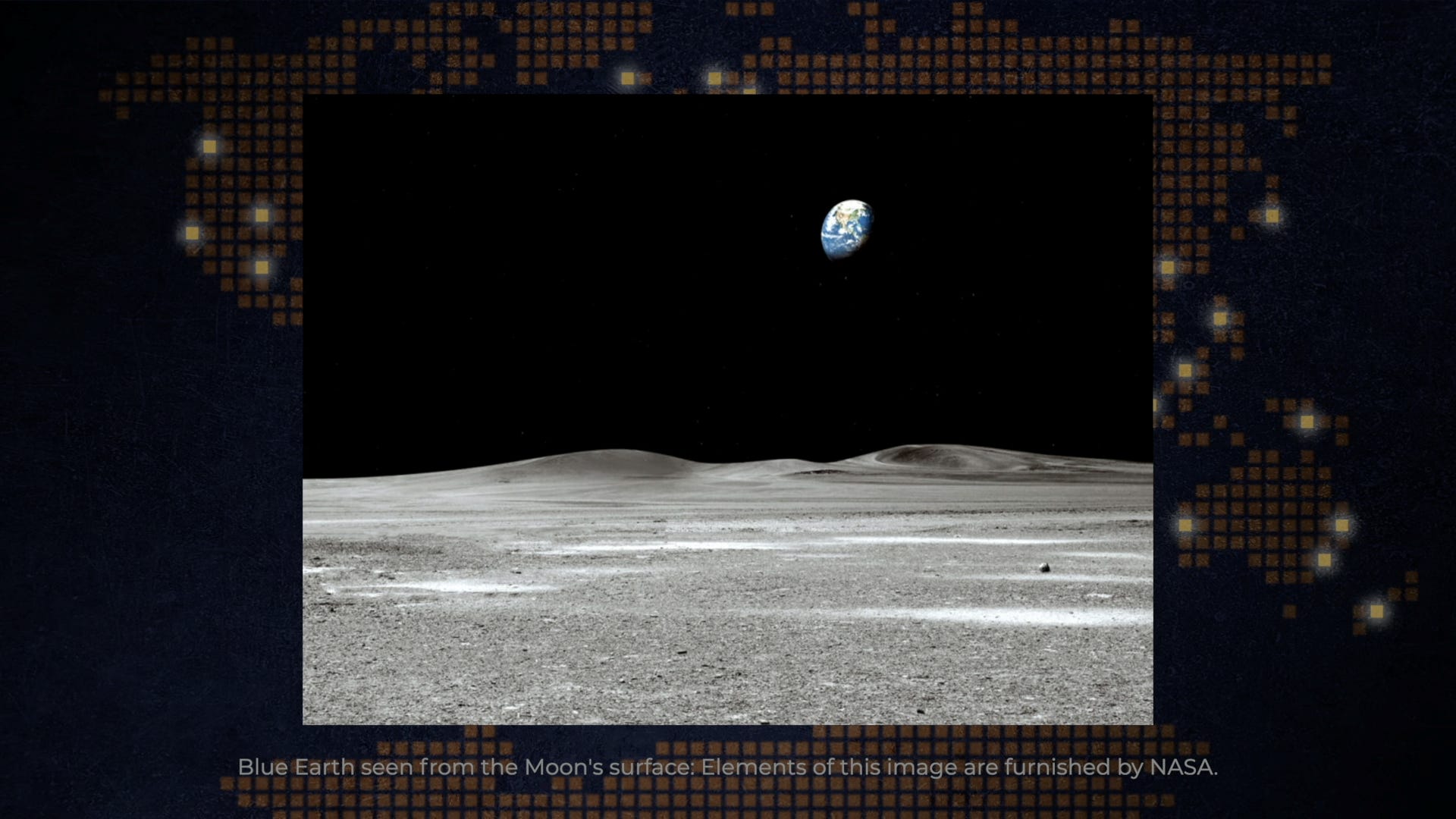
Finally, energy, climate and fire are just what we see in the visible light spectrum. Apparently, darkness and “dark matter” make up everything else.
The Apollo missions revealed stunning images of the Earth from space. What do we see? Most will notice blue, watery Earth suspended in "space." But consider the more elusive "background” – the vast, really unimaginable reach of the universe itself. The darkness hiding in plain sight.
The wildest fact of all may be that, apparently, that’s where most of the Universe’s stuff, its “matter,” lives. Vera Rubin, the brilliant 20th century American astrophysicist, devoted a good part of her career convincing her colleagues that “dark” matter probably makes up most of the physical universe:
“Astronomers thought they were studying the Universe…and now we learn we are just studying the 5% or 10% that is luminous.”
Vera Rubin, Bright Galaxies, Dark Matters, 1996
Wild Ecology Takeaways
So what are our Wild Ecology takeaways?
It appears that the wild universe hides in a “dark fullness.” Wild Ecology’s ice ages and solar storms also hide in Earth’s history, and super-volcanoes hide beneath our feet.
Forces are hiding in other times and spaces of the Wild Globalization landscape. Our YouTube talks that follow track Wild Culture’s “demographic reversal,” and after America’s 9/11 and now Israel’s October 7th we must talk about global human culture’s “wild religions.” We’ll also track Wild Technology’s 2001 Space Odessey’s “Hal, the A.I. guy.” We’ll dive into Wild Economy’s “stealth or shadow economy” where half the world works outside of government controls. Finally, we’ll take on Wild Governance’s massive public debt crisis that’s also hiding in plain sight – trillions of U.S. dollars, Japanese yen, Chinese yuan, and Euro’s that represent promises global governments have no idea how to pay.
As we try to fall in love with the problem we wonder, “How can humanity, or really us “folks” on the street, living in this wildness, have a conscience or an ethical compass?”
Green energy appears elegant, surely “cleaner” than fossil fuels. But we’re learning that
“…a single 1,000 pound EV battery requires digging up 500,000 pounds of raw materials.”
Mark Mills, If you Want 'Renewable Energy,' Get Ready to Dig, 2019
Or Siddharth Kara tells us how our lithium-battery-powered culture uses cobalt that’s mostly dug up by the hands of slave-like “artisanal” miners in crude, open-pit mines of the African Congo (Siddharth Kara).
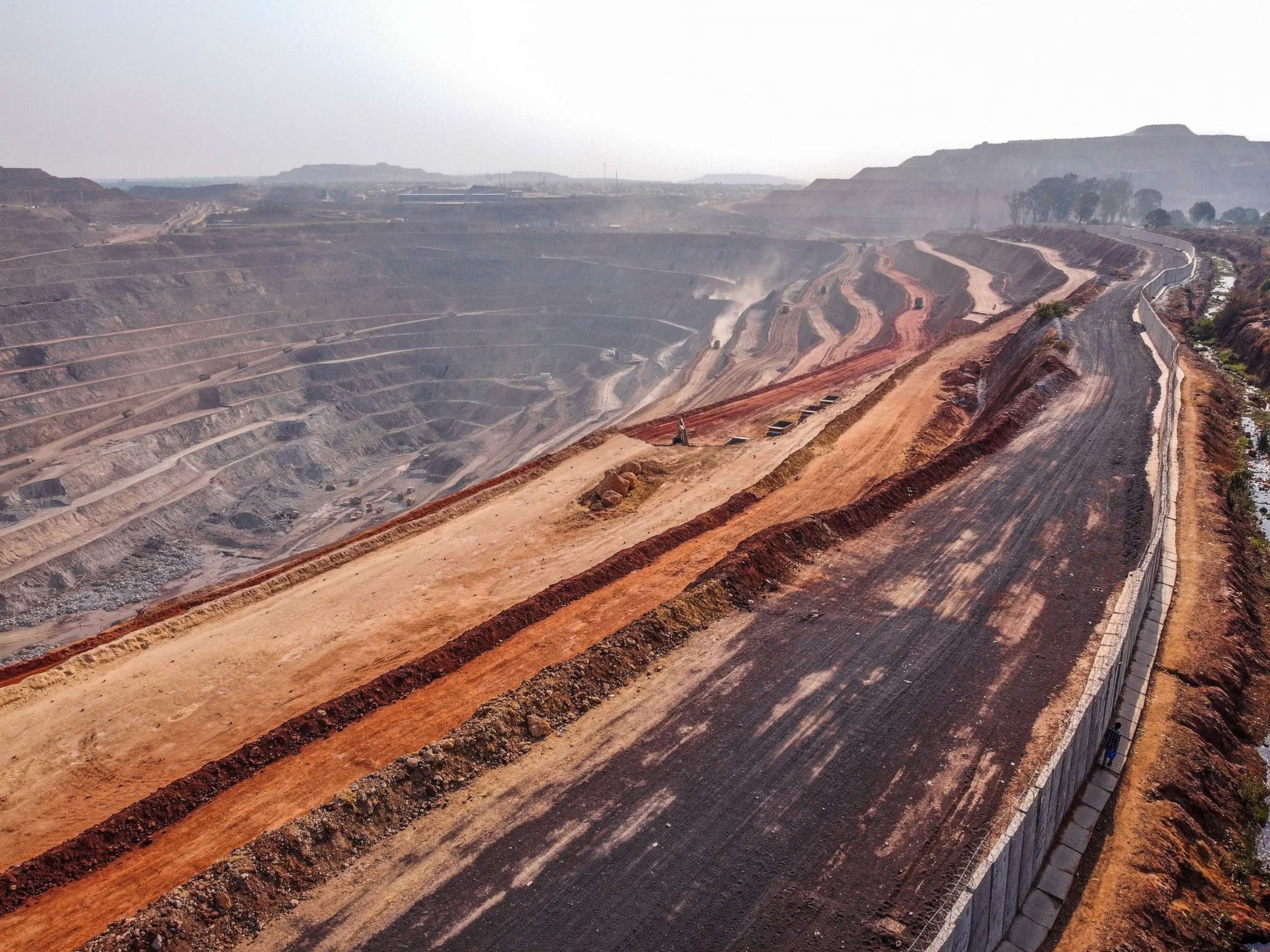
How is that ecological, or ethical? Do these “facts” make us uneasy? Would we have gotten a smartphone if we’d known that? But, then, how do we live without our smartphones now?
We’ll track how wildly innovating and “hyper-natural” humans have pushed the natural world into wonderful but also horrific realities – atomic energy but also atomic bombs, marvelous creations of music and art – but our same human race has also produced genocide, holocausts, and ecological disasters. How do we square that?
The startling insight here is that our seemingly clever, scientific, and globalizing civilization races ahead of our common sense, our critical thinking, and our rational governance. And tragically, ahead of our ethical response.
So here’s an early takeaway: We underestimate the unconstrained force of this wildness at our own, and the Earth’s, risk. Humans have not just emerged “from the wild.” We are wild Homo sapien. The wild is happening right here and now. We’re living this quantum entangled set of momentums. We’re asking how it is affecting the planet, changing it, and how are we getting kicked around by it? Like the kayaker, we’re launching into these wild, entangled flows of energy that constantly create and build, and at the same time that breakdown and destroy, the orders of life on Earth. Hang on!”
If we’ve peaked your interest, or your passion, or your angst, this “Wild Ecology” YouTube is just the second in a suite of several introductory “Wild Globalization” YouTubes. Go to www.substack.wildglobalization.com for transcripts or to our web site at www.wildglobalization.com.