


Welcome back
Welcome back to the Wild Globalization Project!
We’ve bushwhacked a lot of ground, through wild ecologies – ice ages, Milankovitch Cycles, mega-volcanoes, geo-magnetic solar storms, and “dark” matters; on to even wilder human sex- demographics and culture – from the wild savannahs and mystery Gardens to this 21st century “condition” we call “civilization,” to – WHOOSH!

Systemic urbanization triggering “demographic reversals,” with a million people migrating to cities every week, where global companies can yield more power than governments; all of this carried by even wilder technologies – tech-industrial “knowledge” revolutions that electrify and demand massive energy inputs for our magical “devices,” EVs, “Clouds,” and “A.I.,” and at the same time shock and threaten culture with “nano” and “logarithmic” and “nuclear” powers, all while artificial fertilizers feed all eight billion of us; and it’s all bought and sold in wild economies – what were once scarce resources are now superabundant and produce lots and lots of “stuff,” stuff we need, stuff we don’t need, lots of stuff, good stuff, but also bad stuff, like black market human, drug and weapon trafficking, and it’s nonetheless moving economic “value” around the globe to Wal-Marted consumers but also “stealth” consumers who hang out in the exploding, informal, “stealth” economy, where half of humanity lives and works and sneaks under government radars. What’s going on!?
In the next three talks – Wild Money, Wild Capital, and Wild Finance – we’ll explore how civilization’s value-plays are moved through modern financial markets, shifting and slithering tectonically, like earthquakes, through logarithm-controlled, “intelligent machines,” moving trillions of dollars in and out of markets in micro-second “flash trades” yet, suddenly, out of nowhere, “flash crashes” – of virtualized value, as when, “ordinary,” “mom and pop” U.S. residential mortgages got “packaged” into contrived and “derived” financial gadgets that no one really understood, could value, or control.
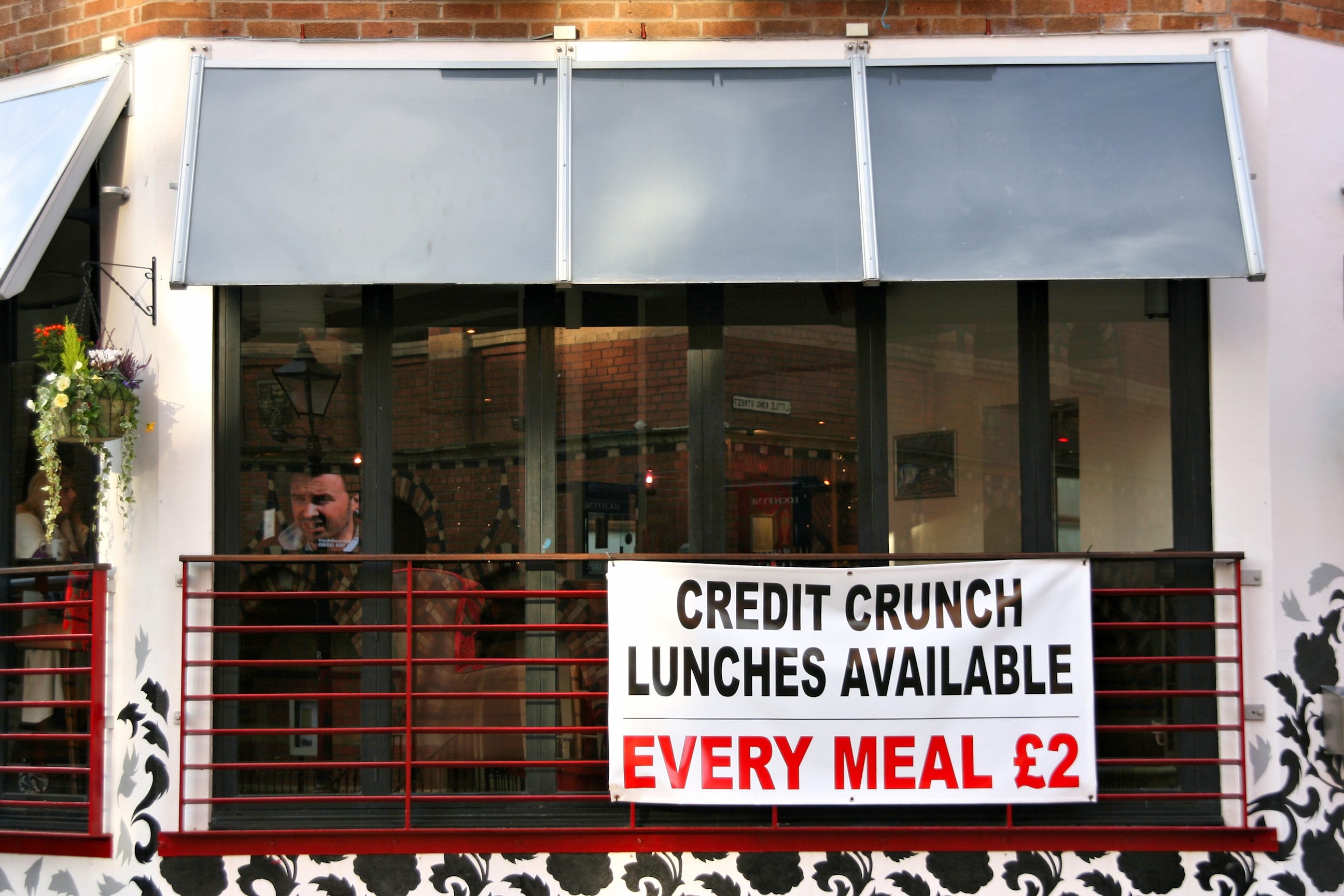
The 2007-09 Financial Crisis demonstrated that civilization is wilder than whatever we were doing before we invented it – or – wait a minute – is this quantum entangled civilization actually inventing us?
This whole “quantum entangled” show of ecology-demographics-technology-economy- governance-wealth is powered, we think, by human knowledge, by what philosopher Bernard Lonergan called the “pure human desire to know.”
But Wild Globalization asks, “If knowledge is the unique power that has done the heavy lifting for human evolution, then doesn’t that say to us that human intelligence and knowledge really reveal the “desire for power, itself?”
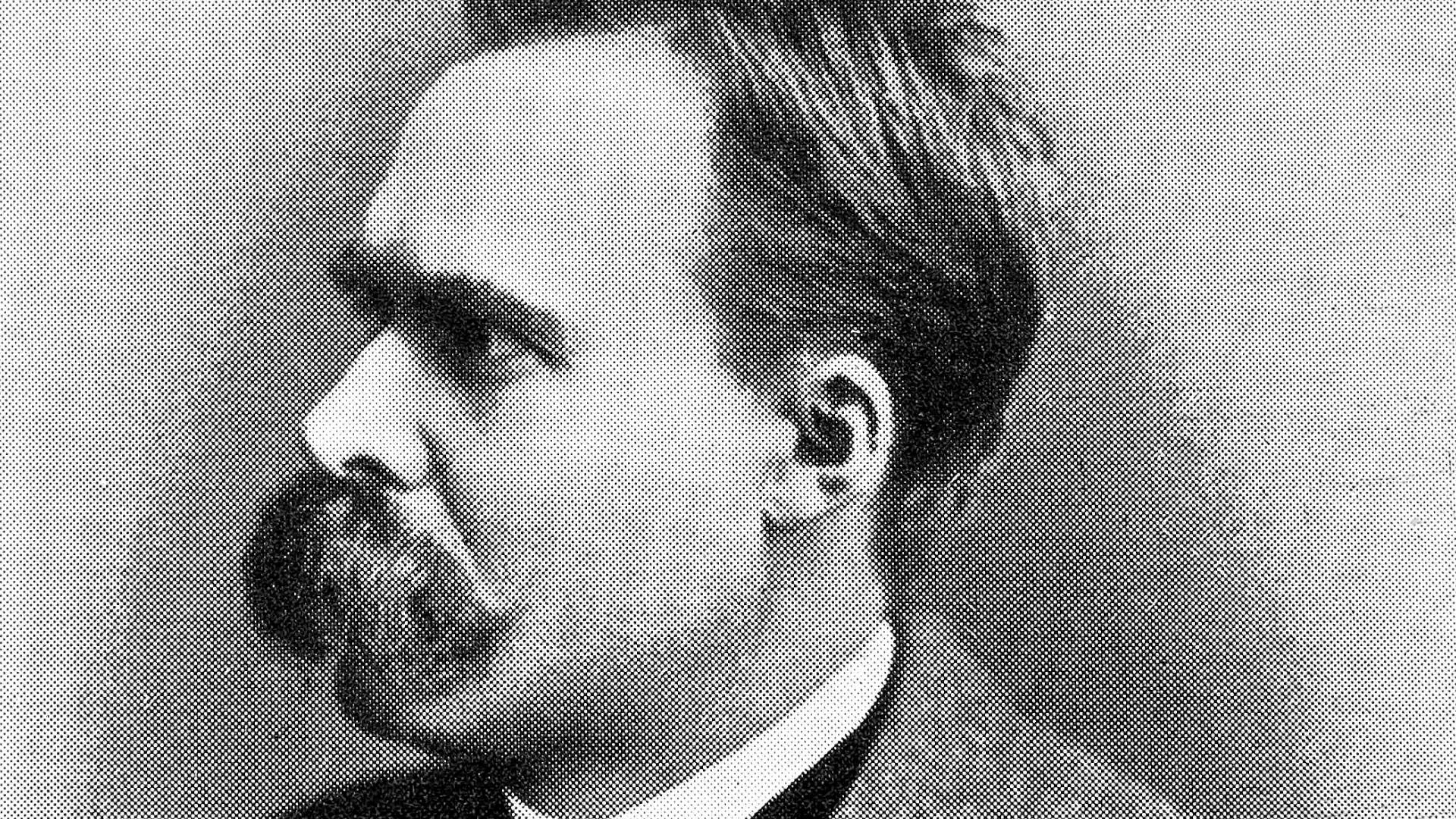
That is, can our most powerful desire, our indomitable will to survive and then thrive with our smarts, can that desire become what Friedrich Nietzsche, that wild philosopher who was born into the 19th century’s industrial age, can it become what he called our “will to power?”
All the pre-historical folks that got us here somehow hung in there with their cleverness, their ingenuity, their imaginations, their expanding “social knowledge,” their random luck – in a word, their “will-power” – through unimaginable risks and desperations – 100,000 year ice ages, volcanic winters, famines, horrific pandemics. They even pulled us through what anthropologists call the “great demographic bottleneck” some 50,000 years ago, when human numbers likely dropped to just a few tens or hundreds of thousands. “We” endured. “We” are the survivors. We are the children of those folks who miraculously, if hyper-precariously, defied the odds and the gods. To all eight billion of “us” today.


That will to survive what nature threw at us recalls Beth Shapiro’s observation that primal humans
“hunted, polluted, and outcompeted hundreds of species (including all our other hominid cousins) to extinction…”
Shapiro, Beth, Life as We Made It – How 50,000 Years of Human Innovation Refined – and Redefined – Nature, New York: Basic Books, 2021.
That same survival instinct now dominates, and it threatens our children and that same planet and all her creatures. Humans have become the new and gravest threat to our own and the natural world’s survival. We are the new tsunami or ice age or saber-toothed tiger in the darkness bearing down on our chances. So who or what restrains us?
Aren’t we all, if we could “live” back the 20th century’s unbridled global wars and atrocities and holocausts and environmental devastations – aren’t we all, or shouldn’t we be, trying to get a grip on these malign and evil chases and races for knowledge and power? Must we not do that? And then, how do we do that?
Money-capital-finance explode on the scene of this quantum entanglement of forces, and so Wild Globalization will briefly examine how they work – OR NOT! – by placing money-capital-finance in the light of the three unique human natures we’re tracking.
First, we’ve noticed how humans are intelligent creatures. We started cooking maybe a million years ago, and now we also cook up gadgets and techs – we come to a river and we invent kayaks! Our intelligence and passion for innovation make us not unnatural but “hyper-natural.” Yet we’re still creations of nature. We emerged from nature herself.


Second, we are free. If the 20th century taught us anything, it is that our intelligence and our hyper-natural powers live in a state of unrestrained and shockingly dangerous freedom – we’ve been kicked out of the Garden. What restrains our intelligence, our hyper-nature?
Wild Globalization claims that it’s our third nature, our ability to love and care for each other and the planet. Our so-called “ethical or altruistic response.” OR NOT! This loving and caring nature, to mourn a loved one’s passing or suffering, to heal the sick, this ethical response is our own primal imperative and it simply has to get a grip on our unrestrained intelligence and our hyper-natural powers. It’s very simple: If we don’t get our loving and caring game together, we’re in trouble. PERIOD!
These “wild” natures live in the minds and hearts and souls of everyone on the planet today. It’s the magic in the newborn child’s eyes. It’s the future. So we ask ourselves, how can we help them make it through this 21st century?
So, go get more popcorn! We’re bushwhacking, first into the money and then the capital and finance jungles. Wild creatures in the dark woods!
So what are “Money Entanglements”?
Global Money-Capital-Finance are the playgrounds where knowledge-power-value flows and creeps and leaks through human economies.
So, what is money?
In classic economics, “money” serves three basic functions:
First, it’s a “unit of account”;
Second, it’s a “medium of exchange”; and
Third, it’s a “store of value.”
“Unit of Account”
A “unit of account” is how we tag or label some economic “thing” – an apple, a box of cornflakes, a smartphone, or a barrel of oil – with a “value unit.” – OR NOT! Money may seem like our first grip on economic value, but as we’ll see money actually appears late in the civilization game – long after capital and finance. So we’re backing into it here.
So, how is money “wild?” Money isn’t the real value of the “thing,” or the “stuff” – it’s the virtual value we explored in our Wild Virtuous Value talk. And because it’s virtual, a “representation” of value, it can be manipulated, inflated, deflated, even created out of thin air. Economies and governments play all sorts of value games with it.
MMT
The latest game is called “Modern Monetary Theory,” or “MMT.” MMT wants to think that governments, like the U.S. Treasury, can “expand its balance sheet,” which is gov-talk for “print more money” – lots more – whenever they think they need it to “pay” for some crisis, like Covid-19 or Middle-East wars, or some favorite pet “program,” like a “Green New Deal” or a “Great Society” or a “Star Wars.” In 2024 the government will use MMT to “pay” – can you say “borrow” – approximately $1.8 trillion (!) of its annual operating expenses, and which now total nearly $40 trillion.


Boiled down, the “theory” claims that sovereign governments who issue their own currency, like the U.S. Federal Reserve, can’t go broke or run out of money – they can always simply “expand” the money supply – meaning, again(!), print more money. From the government’s “big building in Washington D.C.” perspective, this “works,” in principle. Except that, on the street, from the consumer citizen’s or worker’s “pocket” perspective, lots more dollars mean their dollars shrink. Monetary inflation – your pocket dollar’s shrinking value – happens when an economy’s money supply expands faster than the economy is itself growing.
First MMT Takeaway
The MMT debate shows us how money value is, well, wild! We don’t know how it will turn out, but it could be a big mess for our kids long after the policymakers who tried it are gone down the road.
Second MMT Takeaway
MMT “works” best when you’re a “biggest-cheese” sovereign government, like the United States. Smaller nations’ currencies, but even large economies, and anyone trading essential commodities like oil and gas with “petro-dollars,” so really everyone in the global monetary system, everyone gets squeezed by MMT.
Third MMT Takeaway
Governments like the U.S. are likely playing with monetary fire because global money markets wrestle every day over whether they should keep the U.S. dollar as the default reserve currency, or instead try a “basket of global currencies,” say a mix of the dollar, the Euro, and the Chinese Yuan.
What about the U.S. Dollar?
So, since we’re talking globalization, why does the U.S. dollar dominate global money markets if its value is now, since the end of the gold standard in 1971, backed only by the “full faith and credit of the U.S. Government,” a government hanging that $40 trillion out there along with another $75-100 trillion in unfunded future liabilities (Medicare, Medicaid, Social Security)? Why is that?
America’s and the Dollar’s “Comparative Advantages”
What are the dollar’s “comparative advantages,” it’s built-in strengths that other currencies can’t compete with? If you’re an American reading this, you may not appreciate that:
1. “Play of the Land”: After 4.5 billion years of Earth’s tectonic boiling and roiling, The U.S. has ended up with (1) More natural resources, especially energy (coal, oil and gas, favorable climes for wind and solar, uranium ore); (2) More navigable waterways to move industrial-scale goods than all other nations combined; (3) and the U.S.’s unique geography accesses both the Atlantic and Pacific oceans, even more essential in the global economy; (4) Geographically, America is protected from history’s worst political hotspots like Europe, the Middle East, or Asia; (5) lastly, America’s so-called flyover “Greater Midwest is the largest and most productive food producer on the planet.” Summary: Americans can live “carefree” because, as geo-political analyst Peter Zeihan aptly observes,
“Americans didn’t need an empire because they already had a continent.”
Peter Zeihan, The Absent Superpower – The Shale Revolution and a World without America, Austin Tx.: Zeihan on Geopolitics, 2016
2. Economic Juggernaut: America is the most dynamic creator-innovator of new stuff and tech (e.g., nuclear energy, IT, smartphones, telecommunications, the Internet, the “Cloud,” A.I., pharma); more importantly, America knows how to “consumerize” and then make money with its innovations. And in our hyper-globalized 21st century economy, Americans like Gates and Bezos and Dell developed the “platform” company model of productivity, where they control high-profit design and distribution and then “outsource” lower-profit assembly and production to China, Viet Nam, South Korea, Malaysia, Bangladesh, etc. [1] America isn’t just the leader at the mountaintop, it’s reinventing the mountain.
3. Talent Magnet: America’s resources, its freedom to innovate and distribute new ideas and technologies attracts the world’s best talent – think Scottish Alexander Graham Bell’s telephone, Serbian Nikola Tesla’s AC electricity, South African Elon Musk’s Tesla-Starlink-SpaceX, Russian Sergey Brin and Google, Mexican Nobel chemist Mario Molina, or Austrian Hedy Lamarr’s spread spectrum communication technology.


4. Rule of Law: If you want to innovate and build stuff, and therefore risk a lot or even all your money and resources, or if you just want to raise a family, you demand a stable home culture. Which means “rule of law.” As Winston Churchill observed of a lawful, free society, “Democracy is the worst form of government, except for all the others.” America’s democracy and its rule of law maintains the most viable system on the global stage.
5. Military Dominance: The world can be a bad and dangerous place. So, for better or worse, like all of history’s dominant powers, U.S. can innovate and spend more money for the most bad-ass military on the planet.
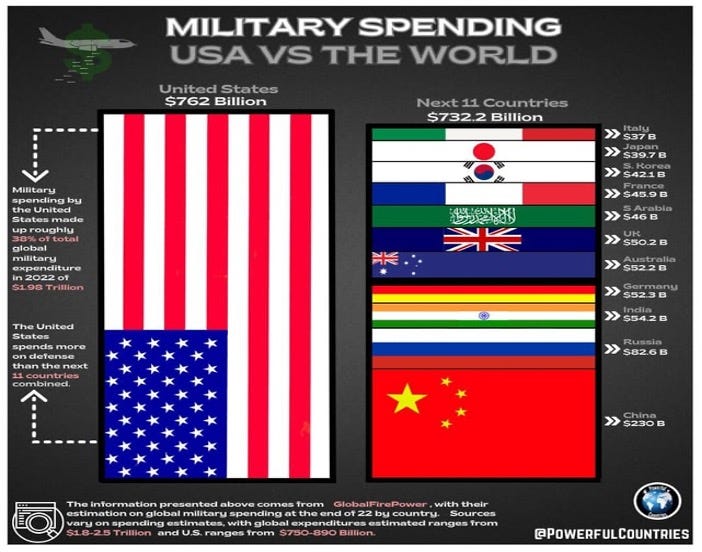
6. Summary: Consequently, if you could ask money or people “Where do you want to go?” it’s likely, America.
America as Global Leader
Secondly, the dollar is dominant because, as the world re-set after the 20th century’s terrible global wars, the U.S. domestic economy emerged unscathed, revived, and more powerful than ever, while Europe’s, the Soviet Union’s, Japan’s, and China’s peoples and infrastructures were devastated. Mainland Asia’s economies hadn’t gotten on the modern tech-industrial escalator and remained largely agrarian.
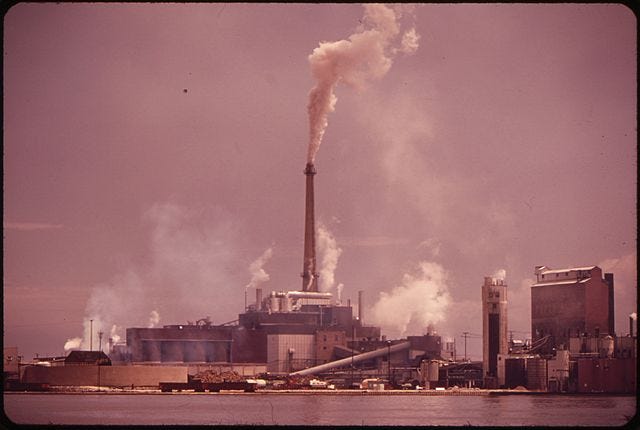
Yet, instead of conquest, America decided to help rebuild Japan and Europe so it could sell its stuff – cars, refrigerators, telephones, Coca-Cola, Corn Flakes, Harley Davidsons – to their consumer markets. America reset the global geo-political ecology by building trading and consumer partners. But to play in this emerging free market game, a re-building nation had to position itself under America’s political and security umbrella. Meanwhile, the Soviet Union forced an alternate, state-controlled, socialist market system, but with limited freedoms, and unappealing consumer stuff that didn’t work – can you say, “Yugo” automobiles – and, worse, catastrophically failed infrastructures – can you say Chernobyl 1986? These two political-economic experiments collided during the Cold War (1945-1989), but with the Soviet collapse in 1989, and China’s subsequent move into the global market economy, the U.S. led West had prevailed and the U.S. dollar would then dominate the world’s trading and economic system. Consequently, the “greenback” moves 60% of international trade, holds 59% of global currency reserves and 64% of global government debt.
Finally, the U.S. dollar flies highest because it’s not the only sovereign government playing the borrowing/MMT game. Virtually all other national governments borrow to pay for their operations, infrastructures and safety-net promises. America’s biggest competitor, China, holds and hides even more massive public debt but also “dead” companies – companies that have stopped operating but still show up on government-owned bank balance sheets.[1] Likewise, Japan’s government debt hovers at 250% of its economy, or “gross domestic product” (“GDP.”[2]) France’s debt/GDP is 112%, and the United Kingdom’s 97%.[3] Most modern governments are swimming in their own debt.
So how can ubiquitous public debt and liabilities be a plus for the dollar? It’s not complicated. It’s because of the first two factors – the U.S. is the biggest and “baddest” global economy. By far.
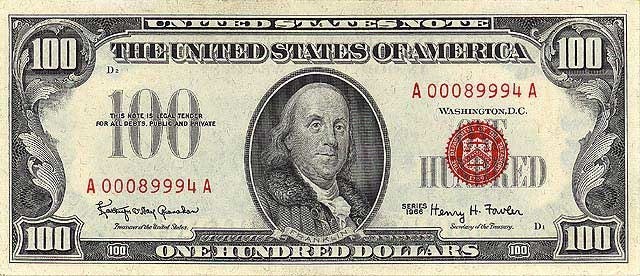
But let’s be clear. MMT or no MMT, the dollar is not “backed by the full faith and credit of the U.S. government,” which really means U.S. taxpayers. How would American – or Chinese or Japanese or European – taxpayers ever pay off their governments’ debts and liabilities, anyway? (Hint – see our Wild Governance talk!) No, the dollar is the default global currency simply because the 21st century U.S innovation-consumer-energy economy is the largest and most productive economy out there. As global financiers jokingly describe it, “The dollar is just the best-looking horse in the glue factory!”
Takeaway: as a “unit of account,” money is wild!
[2] GDP is typically measured as the monetary value of goods and services produced by an economy.
“Medium of Exchange”
Money gets even more frantic when humans start using these units of account as “mediums of exchange” – so trading, buying and selling – stuff, including money itself.
Monies – around $100 trillion every year as of 2024-25 – move and flow and slither every day through local grocery stores, car dealerships, Amazon jungles, petrodollar energy markets, etc., to pay for every kind of stuff.
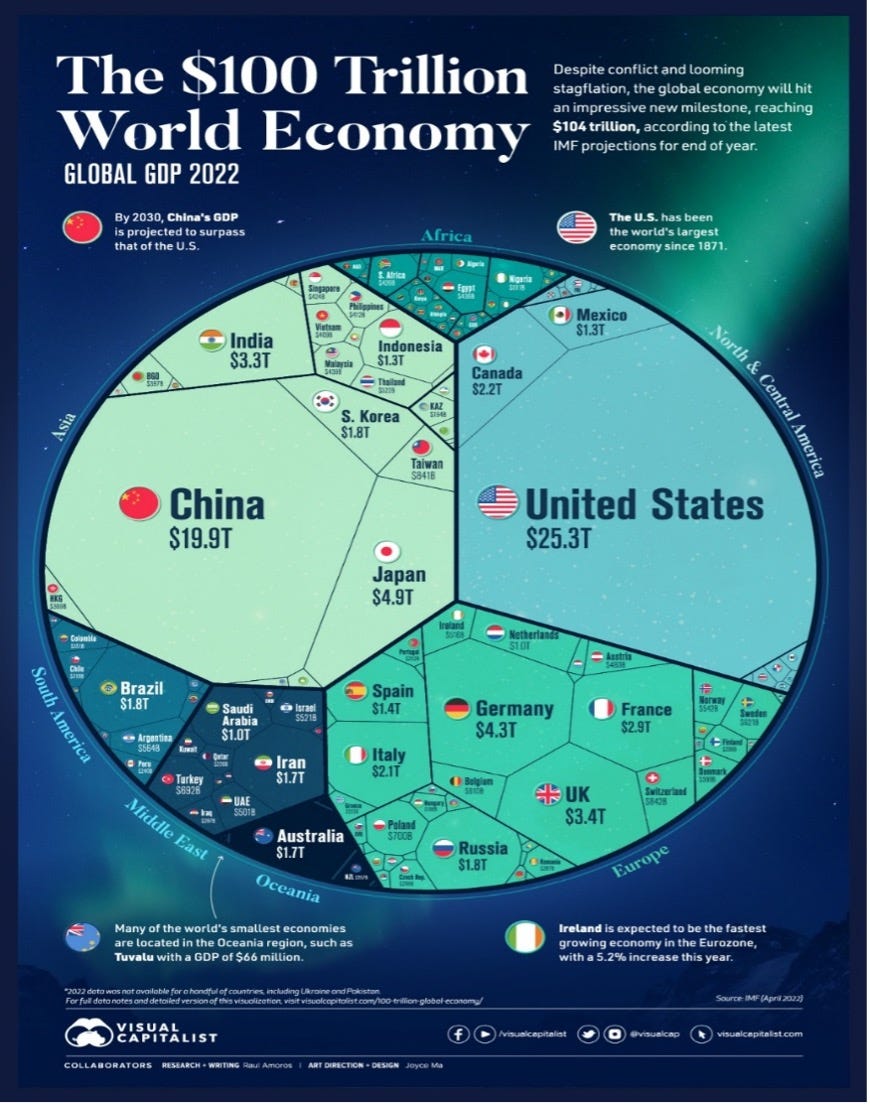

That’s what we can see. Trillions more – maybe another 10-20 trillion, no one really knows – move through “informal,” “off-radar,” or “stealth” street kiosks in emerging global markets that sell off-label consumer knock-off Gucci’s and Rolex’s, or second-hand smartphones. Proctor and Gamble, a Fortune 100 company, generates much of its market share growth because it figured out how to sell its soap into these micro-markets.And at the criminal, “cartel” level, “laundered” monies move all sorts of stolen and rifled goods – high-end bicycles, catalytic converters ripped from parked cars, pick-up trucks – as well as brutal drugs like fentanyl, weapons of war, and still, in our 21st century “civilized” global economy, men, women, and children are sold into indenture and modern slavery. “Money,” mostly dollars moves it all.
But national currencies are not merely direct mediums of exchange for goods and services. Currencies are themselves traded incessantly in global money markets. Every minute of every day, trillions of U.S. dollars, Japanese yen, the Euro, etc., pulsate electronically, algorithmically, through money exchanges. Non-stop. Global currency trading volume averages @$6-7 trillion U.S. dollars every day.Global money reserves churn and turn over currency values equal to the entire $100T formal global economy every two weeks.
Consequently, exchange prices and values of big-ticket items like stocks and real estate can contort and fluctuate wildly and randomly. Economists try to use statistical “standard deviations” to explain and keep track of the volatility of global currency markets. Three standard deviations are considered within a “normal” range and should, theoretically, explain 99% of expected fluctuations. But as Benoit Mandelbrot, a keen critic of “market misbehavior,” observes:
“Evidence abounds of abnormal foreign-exchange markets. A 2002 Citigroup study found unpleasantly sharp price swings in several currencies – dollar, euro, yen, pound, peso, zloty, even the Brazilian real. On one day, the dollar vaulted over the yen by 3.78 percent…that is 5.1 standard deviations…If exchange rates were Gaussian [“normal”] that would be expected to happen once a century. But the biggest fall was a heart-stopping 7.92 percent…The normal odds of that: Not if Citigroup had been trading dollars and yen every day since the Big Bang 15 billion years ago should it have happened, not once.”
Benoit Mandelbrot, Richard L. Hudson, The (mis) Behaviour of Markets – A Fractal View of Financial Turbulence, New York: Basic Books, 2004, p. 96-97.
Mandelbrot is exposing how modern economic methods and measures can’t really account for money-value. Yet it’s money-values that are supposed to carry and transact the global economy.
That’s because money as “units of account” and “mediums of exchange” plays a “knowledge-value” game on the global money market chessboard. Money, because it’s a virtual or “representative” form of value, simply takes on a life of its own.
It’s not unlike a cartoon character, say, Wile E. Coyote, who comes to life, gets constantly out-witted by Roadrunner – and only the money-market gods know what they’ll do – there’s no master money-value cartoonist!
“Store of Value”
Recall, however, that money is supposed to represent the underlying value of some hard-product “thing – a car, a bushel of grain, a building, a barrel of oil, a computer, a day’s labor, etc. Money is the way civilization measures and counts and transacts the “store of value” of real market stuff.
This sets us up for two challenges. First, we ask, “But value of what?” Drilled down, we’ve discovered that money really measures “knowledge value.” So not “oil” itself. Oil’s been around for millions of years, and no one knew what to do with it or how to get at it – as we’ve learned, oil is about what knowledge can do or make or power with it. So not the physical “oil-stuff” – rather, how do you know why or how to make it and then use it.


Even human labor is knowledge-bound – the Industrial Revolutions were about technology and the knowledge transformation of production labor, that is, how efficiently and expertly can the human hand – or now A.I. empowered automation – make stuff. Money represents knowledge value. But knowledge, as we’ve seen, is ephemeral, constantly being created, it’s evolving, churning and changing, getting tested, replaced, overrun, then re-emerging.
We understand money’s second great challenge when we consider that market “price” value of everything is immersed in what we’ve discovered is civilization’s wildly globalized “quantum entanglement” – ecological factors like climate or volcanoes or even Covid-19, demographic factors like population reversals and immigration flows, technological factors like Chernobyl disasters, economic volatilities like the 2007-09 financial crisis, and governance malfeasance factors like the government debt crisis.
Wild money – “units of value,” “mediums of exchange,” and “stores of value” – transact our wildly globalized human civilization.
Yet, as it turns out, maybe that’s not all money does.
“Instrument of Sovereignty”
Astonishingly, a new, game-changing “money power” has emerged from this civilization’s 19th-21st century monetary system.
As we’ve seen, under the modern socio-economic revolutions (industrial, technological, digital, communications, and now A.I.), the nations of the world have become increasingly integrated. Global economist Paul Tiffany observes:
“…[under] globalization the nation states of the world have become more closely integrated…trade, technology, and capital flows across borders…barriers have been reduced. It is the triumph of the market over the state…politicians no longer are able to tell their citizens what or where or how they can buy goods and services…That, [along with] the logistics revolution in supply chain management has turned the entire world into a bazaar…”
Consequently, as the global economy has integrated, money is now an “instrument of sovereignty.” Milton Friedman observed in 1962 this emerging “discretionary authority of money”:
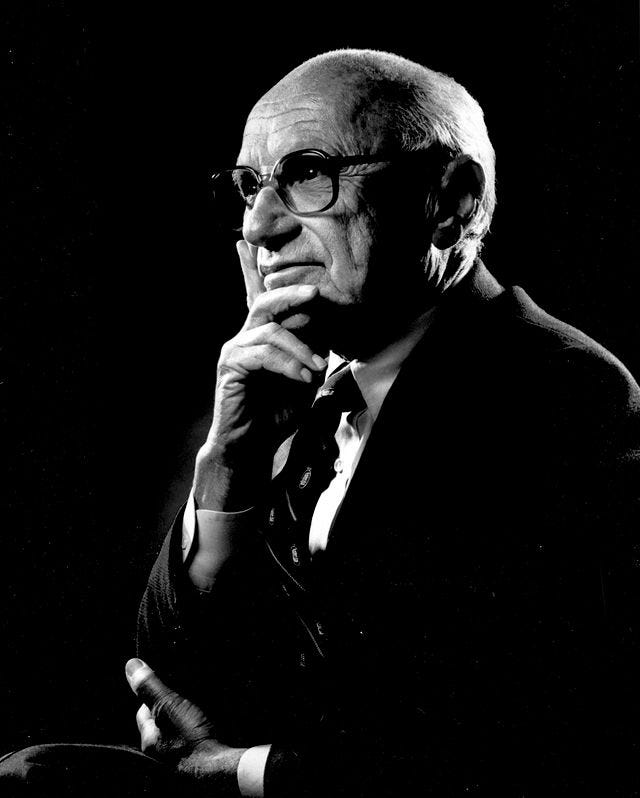
“Successive financial crises, in 1873, 1884, 1890, and 1893…[and] the panic of 1907…finally crystallized the financial system into an urgent demand for government action. A National Monetary Commission was established by Congress and… the Federal Reserve Act passed in 1913. At the time the Act was passed, a gold standard reigned supreme throughout the world… No sooner was the Act passed than World War I broke out. There was a large-scale abandonment of the gold standard… By the end of the war, the Reserve System was no longer a minor adjunct to the gold standard designed to ensure the convertibility of one form of money into others and to regulate and supervise banks. It had become a powerful discretionary authority able to determine the quantity of money in the United States and to affect international financial conditions throughout the world.”
Friedman, Milton, Capitalism and Freedom, Chicago: University of Chicago Press, 2009, 40th Printing, p. 43-44.
Friedman is observing recent modern history’s entanglement of money and political power. Money is now a global currency of political power. By the 1980s breakout of Western free-markets over the collapsing Soviet and Chinese socialist-communist models, it was no longer merely who had the most bombs and rockets and soldiers, it’s who had the biggest and baddest knowledge-innovation-consumer – and now energy – economy? Who’s inventing the Internet, buying and selling the most stuff over the Googles and Amazons, who’s private companies are landing rockets on ocean barges, who’s unleashing multi-directional fractional oil and gas extraction, who’s cooking up A.I.? Finally, whose money is unitizing, exchanging, and storing most of the value of all that?

It's the dollar, for now, a dollar that runs 60% of trade, holds 59% of money reserves and 64% of global government debt. The dollar is more than a currency. It’s a unit of geo-political power that is regularly used to influence and leverage other nations. The international money market is a kind monetary battlefield – nations push-back against the dollar but for now, because of the factors above, the dollar hangs on. But the old adage, “Speak softly and carry a big [i.e., military] stick…,” now reads, “…and invent produce, buy and sell, consume, and energize …more than the other guys!”
The Evolution of Money
Bit-Money and Blockchain
While governments are busy trying to run the jungle with Modern Monetary Theory (“MMT”), the street – thinkers, dreamers, innovator-technologists – are at it devising new “democratized” “units” of account that may actually be transforming the money jungle itself.

Bitcoin was first on the block, powered by de-centralized Blockchain verification technology – literally, multiple “street” IT systems using “decentralized” (meaning disconnected from government control), “immutable” (meaning non-accessible and unchangeable by politicians or others), digitized “public ledgers” to verify and record transactions across a network of personal computers. Instead of the chief-gov (like the Federal Reserve) running the jungle, the jungle’s own networked information technology runs the unit of account, medium of exchange, and value storage system. At least that’s the theory. Sounds like pretty cool jungle tech to me!
There are catches, however. Bitcoin is not designed to grow its units as the world’s economy value expands, so as we write, a single Bitcoin is a six-figure dollar proposition. And it’s still reflected in the market by “dollars” – a $5 latté will set you back 0.00005 bitcoins.
Blockchain, the tech that powers “bit-money,” however, is very likely here to stay and will expand, and may be at the forefront of what George Gilder suspects will eventually lead to the “de-centralization” – and liberation – of the global information system. The Achilles heals of the current centralized, “Googled,” “top-down,” system are 1/Disintegrating security and, 2/Exploding and impossible data-center energy demands when all eight billion of us start watching movies on our smartphones. At once. Blockchain’s bottom up, de-centralized security, where you own your security and data rather than putting it out into the Cloud, combined with already existing personal computer energy consumption, may be the future “out there in the dark wild.” But getting there won’t be fluid or predictable. So, for the time being, Blockchain – and its money players like Bitcoin, Ethereum, etc. – will likely run as alternative new jungle money-players.
Epilogue
Money – these units of account that serve as our mediums of exchange for the wild values of civilization – money is evolving and probably on the same exponential scale and velocity as civilization’s own creative-destructive run through history.
And money – virtual knowledge-innovation value really – gets even more wildly and quantumly entangled as it morphs and “jungles” into “capital” and “finance,” exactly where our question, “What the heck is going on?” now turns its attention.